This build is not the easiest as the fit of the kit is not the greatest. So until I have some proper progress to show for I thought I would post some info on the plane.
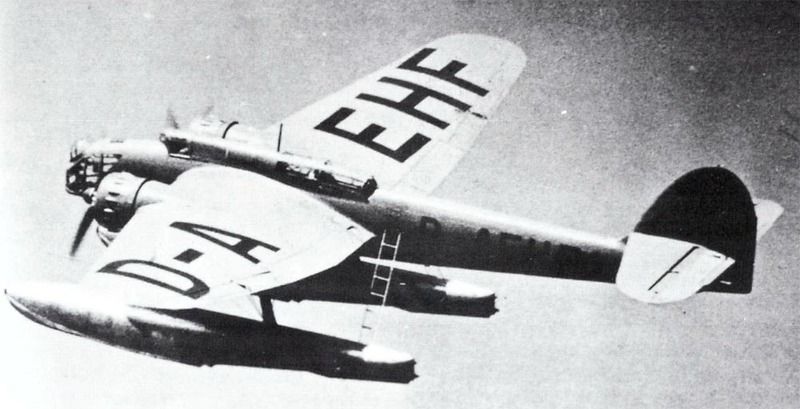
The first He 115 prototype
From Wikipedia
In 1935, the German Reich Air Ministry (Reichsluftfahrtministerium or RLM) produced a requirement for a twin engined general purpose floatplane, suitable both for patrol and for anti-shipping strikes with bombs and torpedoes. Proposals were received from both Heinkel Flugzeugwerke and from Blohm & Voss' aircraft subsidiary, Hamburger Flugzeugbau, and on 1 November 1935, orders were placed with both Heinkel and Hamburger Flugzeugbau for three prototypes each of their prospective designs, the He 115 and the Ha 140.
The first prototype Heinkel flew in August 1937, with testing proving successful, with the He 115 being selected over the Ha 140 early in 1938, resulting in an order for an additional prototype and 10 pre-production aircraft. Meanwhile, the first prototype was used to set a series of international records for floatplanes over 1,000 km (621 mi) and 2,000 km (1,243 mi) closed circuits at a speed of 328 km/h (204 mph).
Armament initially consisted of two 7.92 mm (.312 in) MG 15 machine guns, one in the nose and one in the dorsal position. Later He 115s were fitted with a fixed forward-firing 15 mm or 20 mm MG 151 cannon, and two rearward-firing 7.92 mm (.312 in) MG 17 machine guns in the engine nacelles. Ordnance used by He 115 variants included LTF 5 or LTF 6b torpedoes and SD 500 500 kg (1,100 lb) or SC 250 250 kg (550 lb) bombs. Some also carried LMB III or LMA mines.
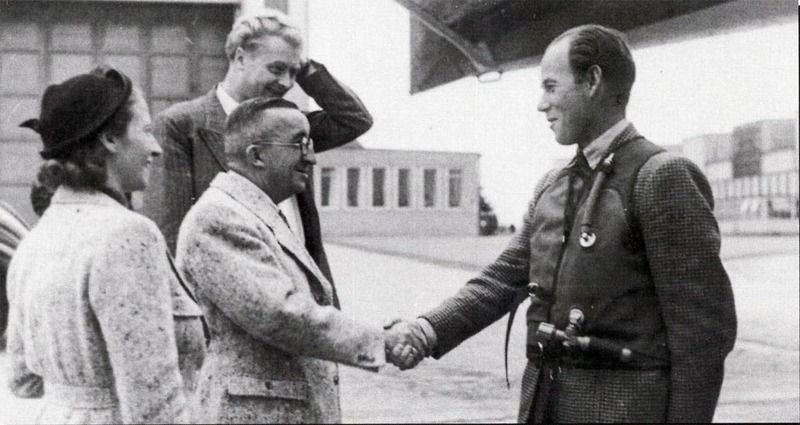
Ernst Heinkel with wife greeting Björn Bjuggren on delivery of aircraft no.109 to Sweden at Warnemünde on September 12st, 1939
General characteristics
Crew: 3
Length: 17.30 m (56 ft 9 in)
Wingspan: 22.28 m (73 ft 1 in)
Height: 6.60 m (21 ft 7.75 in)
Wing area: 87.5 m² (942 ft²)
Empty weight: 5,290 kg (11,670 lb)
Loaded weight: 10,400 kg (22,928 lb)
Powerplant: 2 × BMW 132K 9-cylinder radial engines, 706 kW (960 PS) each
Performance
Maximum speed: 327 km/h (203 mph)
Combat radius: 2,100 km (1,305 mi)
Service ceiling: 5,200 m (17,100 ft)
Wing loading: 103.8 kg/m² (21.3 lb/ft²)
Power/mass: 139 W/kg (0.084 hp/lb)
Armament
1 × fixed 7.92 mm (.312 in) MG 17 machine gun and 1 × flexible 7.92 mm (.312 in) MG 15 machine gun in dorsal and nose positions
Five 250 kg (550 lb) bombs, or two such bombs and one torpedo of 800 kg (1,760 lb)
One 920 kg (2,030 lb) sea mine.
https://en.wikipedia.org/wiki/Heinkel_He_115
He 115 T2 in Sweden
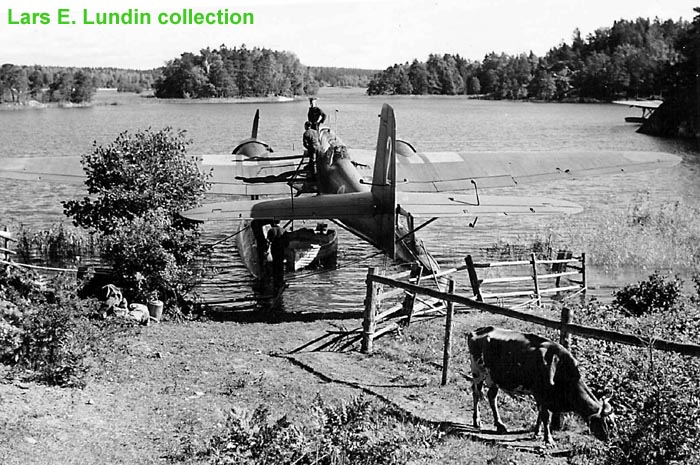
Twelve aircraft of the variant Heinkel He 115 A-2 were ordered in the summer of 1938. The dozen Heinkels were delivered to Wing F 2 at Hägernäs near Stockholm from April to October 1939. The Swedish designation was T 2. They got the Air Force numbers 101-112. Further six aircraft were ordered, but were never delivered due to the outbreak of WWII.
On the 9th of April 1940, Germany occupied both Denmark and the most important parts of Norway in a lightning attack - operation Weserübung. In connection to this, Germany dictated a number of terms to Sweden, terms which were impossible for the Swedish government to agree with. The Germans demanded, for instance, that Sweden did not mobilize further troops. Germany demanded also Sweden to let three railway trains each of 30-40 wagons loaded with war material to be transferred trough Sweden to Narvik.
The Swedish refusal resulted in a crisis in the relationship between Sweden and Germany. As a war situation seemed possible, the T 2s left their permanent base at Hägernäs. They were relocated to Gålö, a war base in the archipelago south of Stockholm. The work to enlarge the Gålö base started immediately. Until more workshops and living quarters were built ashore, the navy ships Dristigheten and Rane was use as floating accommodation.
Other war bases were also used. The widespread archipelago provided many suitable places for operations and good camouflage of the aircraft and equipment.
The aircraft were based off F 2 at Hägernäs until the WWII was over.
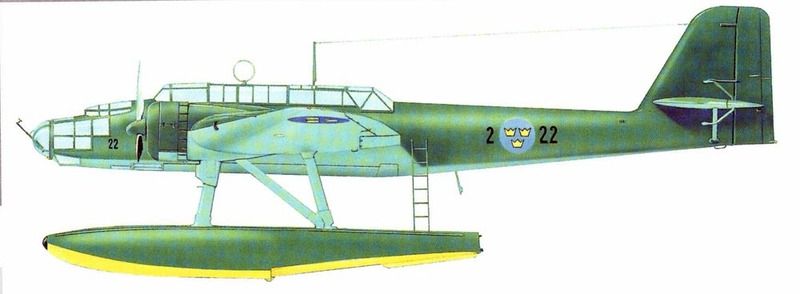
Heinkel He 115. T2 no.102 in m/37 markings
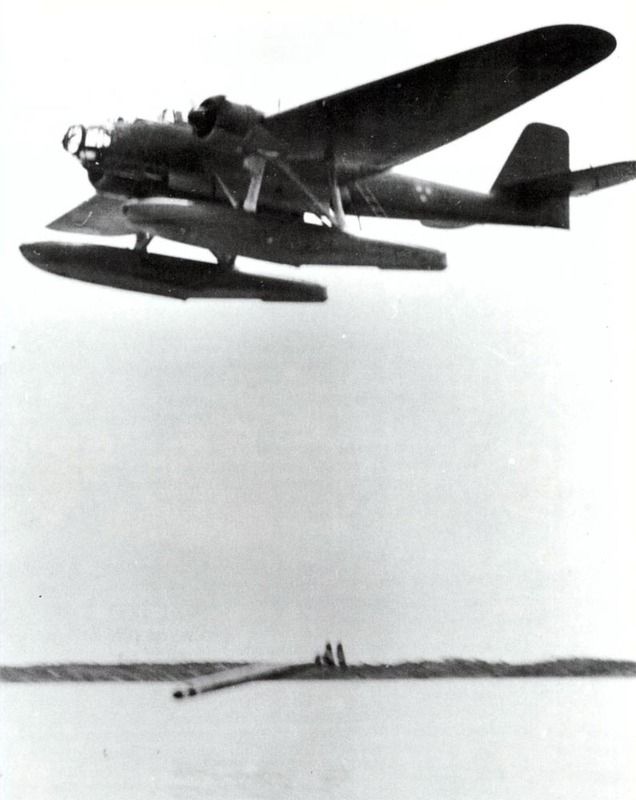
Torpedo drop 1939
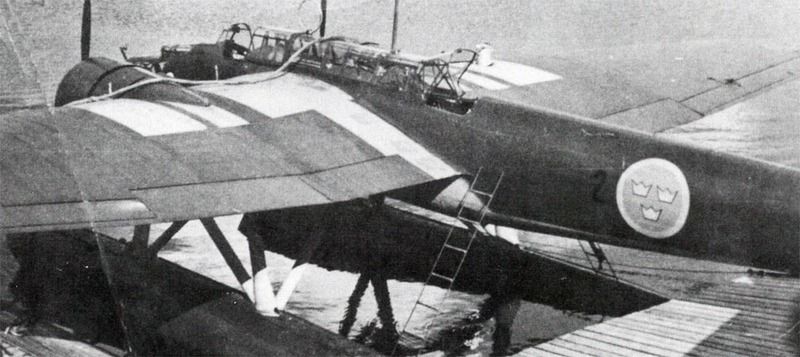
A few of the images of the T2 show light colored walk ways on both wings. In most photos there are none, where these markings only applied to a couple of the aircraft for war games?
More info on the Swedish use of the He 115
http://www.avrosys.nu/aircraft/Torped/192t2/192T2.htm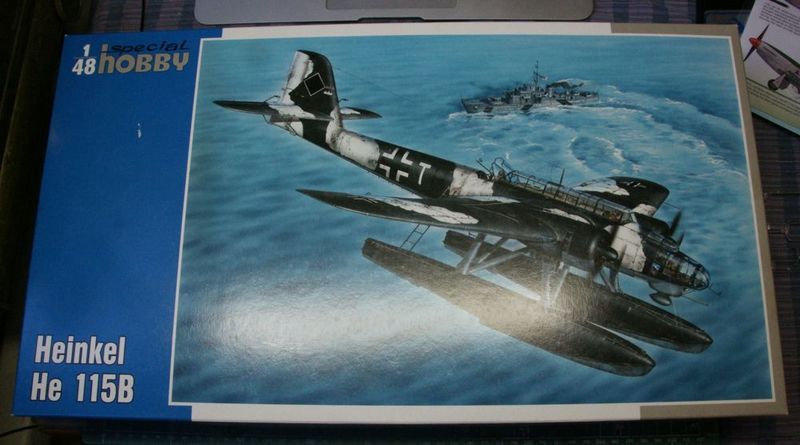
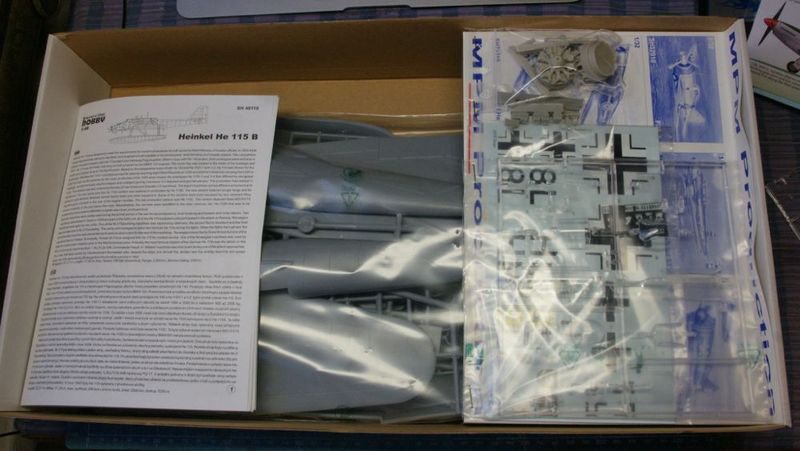
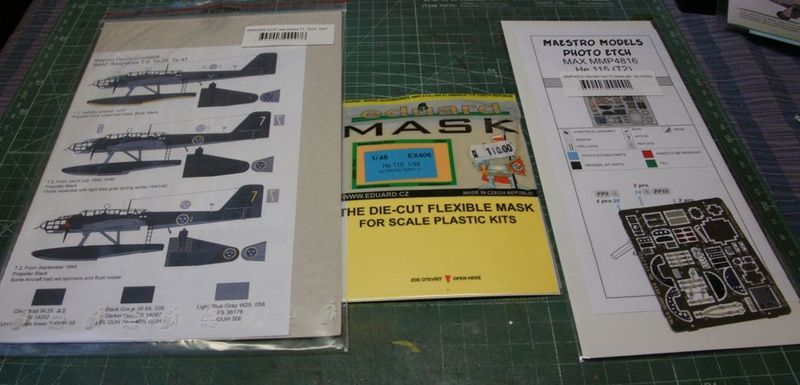
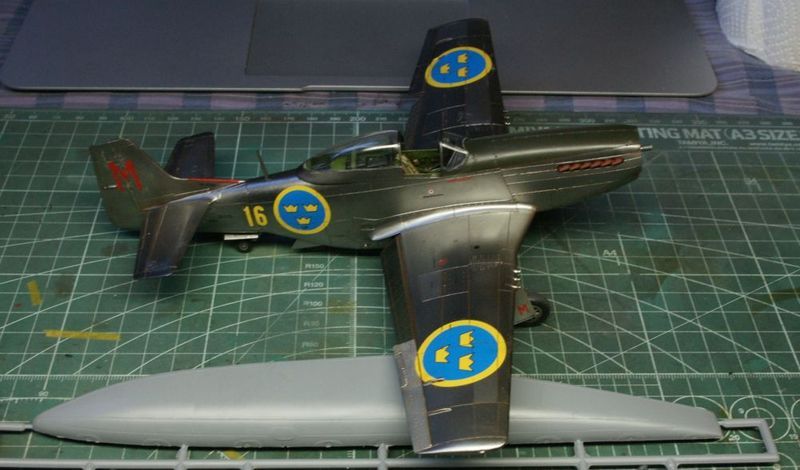
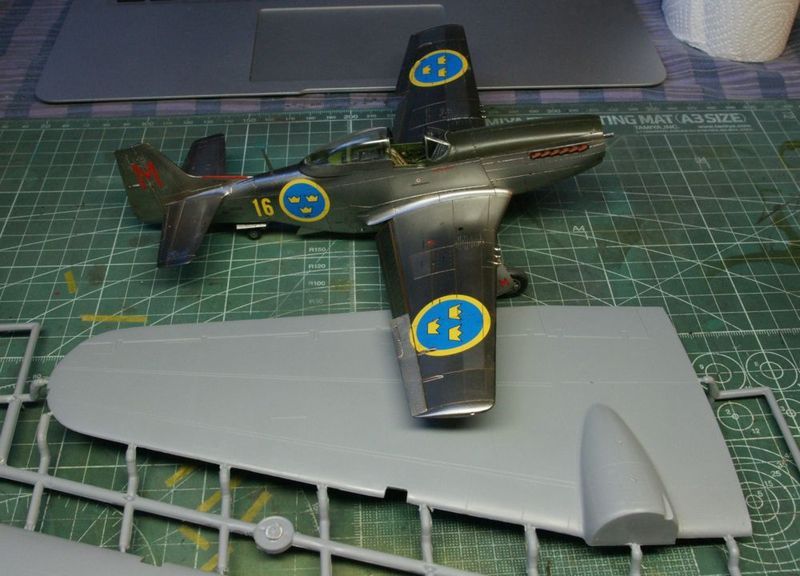
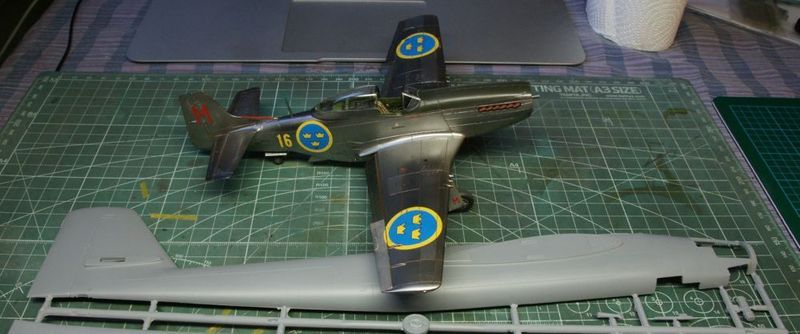


 Anyway i'm in...


