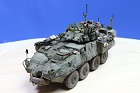
Zvezda T-80BV with ERA 1/35
- Dunhill2005
- Sergeant Major of the Army

- Posts: 1195
- Joined: Sat Aug 03, 2013 1:38 pm
- Location: Wunstorf, Germany

Zvezda T-80BV with ERA 1/35
This is my entry for this SiG...
- DBMiller
- Chief Warrant Officer 3

- Posts: 2250
- Joined: Mon Jan 06, 2014 8:10 pm
- Location: Guilford, Vermont, USA

Re: Zvezda T-80BV with ERA 1/35
Ooooooh! I was just looking at this kit online!
ON THE BENCH: Do I have to say? 
- Dunhill2005
- Sergeant Major of the Army

- Posts: 1195
- Joined: Sat Aug 03, 2013 1:38 pm
- Location: Wunstorf, Germany

Re: Zvezda T-80BV with ERA 1/35
Go on. Take itDBMiller wrote:Ooooooh! I was just looking at this kit online!
- schweinhund227
- Chief Warrant Officer 4

- Posts: 2627
- Joined: Fri May 24, 2013 9:51 pm
- Location: Ontario,Canada
- Contact:

Re: Zvezda T-80BV with ERA 1/35
ah those were the days.....

- Dunhill2005
- Sergeant Major of the Army

- Posts: 1195
- Joined: Sat Aug 03, 2013 1:38 pm
- Location: Wunstorf, Germany

Re: Zvezda T-80BV with ERA 1/35
Yes, I know the kit is a little older...wise manschweinhund227 wrote:ah those were the days.....
- Dunhill2005
- Sergeant Major of the Army

- Posts: 1195
- Joined: Sat Aug 03, 2013 1:38 pm
- Location: Wunstorf, Germany

Re: Zvezda T-80BV with ERA 1/35
At last here we go
The last few days before the start of a SiG / GB is hell for me... I've seen thousand times in the box but I must not touch it
.
Am I an Addict???
Development:
The T-80 was developed in the late 1970's and is believed to have entered production in 1983 with first MBT's being completed the following year. By early 1996 it is estimated that total production of the T-80 amounted 20.000 vehicles. The most significant features of the T-80 over the earlier T-72 are ist gas turbine engine and the ability to fire the Songster AT-8 ATGW from the 125mm gun.
The overall layout of the T-80 is similar to that of other recent Soviet MBT's with the driver at the front, two man turret in centre with the gunner to the left and the commander, who also mans the 12,7mm AA machine gun, on the right. The powerpack, which includes a gas turbine engine, is at the rear. With the exception of the T-64, all the post WWII Russian MBT's had the exhaust outlet on the left side towards the rear. The more recent T-80 has a distinct oblong outlet in the centre of the hull at the rear.
The T-80 has a 125mm smooth bore gun that is fed by an automatic loader which can fire HE-FRAG (FS), HEAT-FS, and APFDS-T rounds, or an AT-Songster ATGW.
Variants:
T-80: Original production model, not built in large numbers.
T-80B: First version produced in large numbers.
T-80BK: Command version of T-80B with additional communications equipment.
T-80BV: T-80 with explosive reactive armour, combat weight 41,7 tonnes.
T-80BVK: Command version of T-80BV with additional communications Equipment.
T-80U: First seen in 1989 ans sometimes referred to as M1998 by NATO, has diesel rather gas turbine, different engine decking, new commander's copular, four smoke grenade dischargerseither side of turret, different vision Equipment and new armour package that includes armoured side skirts.
T-80UD: Has gas turbine replaced by 1100hp diesel engine.
T-80UK: Command tank version of T-80U.
T-80UM: Powered by 1250hp gas turbine, new fire control systems.
T-84: Further development of T-80 in the Ukraine
Manufacturers
Kirov Works (Leningrad), Khar'kov (Ukraine) and Omsk.
(Jane's Tank & combat vehicle recognition guide)
The last few days before the start of a SiG / GB is hell for me... I've seen thousand times in the box but I must not touch it
Am I an Addict???
Development:
The T-80 was developed in the late 1970's and is believed to have entered production in 1983 with first MBT's being completed the following year. By early 1996 it is estimated that total production of the T-80 amounted 20.000 vehicles. The most significant features of the T-80 over the earlier T-72 are ist gas turbine engine and the ability to fire the Songster AT-8 ATGW from the 125mm gun.
The overall layout of the T-80 is similar to that of other recent Soviet MBT's with the driver at the front, two man turret in centre with the gunner to the left and the commander, who also mans the 12,7mm AA machine gun, on the right. The powerpack, which includes a gas turbine engine, is at the rear. With the exception of the T-64, all the post WWII Russian MBT's had the exhaust outlet on the left side towards the rear. The more recent T-80 has a distinct oblong outlet in the centre of the hull at the rear.
The T-80 has a 125mm smooth bore gun that is fed by an automatic loader which can fire HE-FRAG (FS), HEAT-FS, and APFDS-T rounds, or an AT-Songster ATGW.
Variants:
T-80: Original production model, not built in large numbers.
T-80B: First version produced in large numbers.
T-80BK: Command version of T-80B with additional communications equipment.
T-80BV: T-80 with explosive reactive armour, combat weight 41,7 tonnes.
T-80BVK: Command version of T-80BV with additional communications Equipment.
T-80U: First seen in 1989 ans sometimes referred to as M1998 by NATO, has diesel rather gas turbine, different engine decking, new commander's copular, four smoke grenade dischargerseither side of turret, different vision Equipment and new armour package that includes armoured side skirts.
T-80UD: Has gas turbine replaced by 1100hp diesel engine.
T-80UK: Command tank version of T-80U.
T-80UM: Powered by 1250hp gas turbine, new fire control systems.
T-84: Further development of T-80 in the Ukraine
Manufacturers
Kirov Works (Leningrad), Khar'kov (Ukraine) and Omsk.
(Jane's Tank & combat vehicle recognition guide)
- ltsmash
- Private First Class

- Posts: 33
- Joined: Thu Sep 25, 2014 2:27 am
- Location: Naperville, IL (occassionally)
Re: Zvezda T-80BV with ERA 1/35
It may be an older kit but I am looking forward to the build. Great subject.
- Dunhill2005
- Sergeant Major of the Army

- Posts: 1195
- Joined: Sat Aug 03, 2013 1:38 pm
- Location: Wunstorf, Germany

Re: Zvezda T-80BV with ERA 1/35
You are right. The kit is a bit olderltsmash wrote:It may be an older kit but I am looking forward to the build. Great subject.
Thereby, the kit is affordable...
I think that the Russian tanks look great. You can not go wrong there too. Are you broken a part, you can say, battle damage or incorrect handling of the crew
- DBMiller
- Chief Warrant Officer 3

- Posts: 2250
- Joined: Mon Jan 06, 2014 8:10 pm
- Location: Guilford, Vermont, USA

Re: Zvezda T-80BV with ERA 1/35
The T-80 is a sweet looking tank! I love the camo on the parade photo you posted!
ON THE BENCH: Do I have to say? 
- Dunhill2005
- Sergeant Major of the Army

- Posts: 1195
- Joined: Sat Aug 03, 2013 1:38 pm
- Location: Wunstorf, Germany

Re: Zvezda T-80BV with ERA 1/35
This is my preferred painting. Anyway I take probably another!DBMiller wrote:The T-80 is a sweet looking tank! I love the camo on the parade photo you posted!
My T-80 gets a "green-brown-grey" camo...
- Dunhill2005
- Sergeant Major of the Army

- Posts: 1195
- Joined: Sat Aug 03, 2013 1:38 pm
- Location: Wunstorf, Germany

Re: Zvezda T-80BV with ERA 1/35
Look inside the Box
The box itself is made of VERY thick cardboard. The seven sprues lie in the box+ decals+ instructions. No plasic-bag to protect the parts...
. I'll spare you to Show each sprue individually. The parts look good molded
. Unfortunately, I see a lot of ejector marks
. The detailing is good but not stunning. two small parts detached from sprue...
The box itself is made of VERY thick cardboard. The seven sprues lie in the box+ decals+ instructions. No plasic-bag to protect the parts...
- Dunhill2005
- Sergeant Major of the Army

- Posts: 1195
- Joined: Sat Aug 03, 2013 1:38 pm
- Location: Wunstorf, Germany

Re: Zvezda T-80BV with ERA 1/35
Further informations about the T-80:
The T-80 is a third-generation main battle tank (MBT) designed and manufactured in the Soviet Union. A development of the T-64, it entered service in 1976 and was the first production tank to be equipped with a gas turbine engine for main propulsion. The T-80U was last produced in a factory in Omsk, Russia, while the T-80UD and further-developed T-84 continue to be produced in Ukraine. The T-80 and its variants are in service in Belarus, Cyprus, Kazakhstan, Pakistan, Russia, South Korea, and Ukraine. The chief designer of the T-80 was the Russian engineer Nikolay Popov.
- Dunhill2005
- Sergeant Major of the Army

- Posts: 1195
- Joined: Sat Aug 03, 2013 1:38 pm
- Location: Wunstorf, Germany

Re: Zvezda T-80BV with ERA 1/35
Instructions
The instructions could be good... if you could speak and read Russian. Almost everything is in Cyrillic...
On the first page is a graphic with all sprues
The labeling is in Cyrillic of cause
The assembling of the hull with the existing Images is probably well manageable.
The assembling of the turret is poorly presented. The whole turret is explained in just two steps. Because there are many small parts installed, I understand very little.
I hope I find some reference pictures on the internet ...
Let's get to painting-guide.Not great either...
There are 3 versions to choose.
Three-tone camo of an sub-unit tank 2004
A green one of the 10th Guards' armored Div. in East Germany.
And an other green one of the 81st Guards' motorized Reg. early 90's
Of all, there is only a side front and rear view. No top view and no idea about the other side...
Humbrol paints are recommended.The other recommended color are written in Cyrillic
The instructions could be good... if you could speak and read Russian. Almost everything is in Cyrillic...
On the first page is a graphic with all sprues
The assembling of the hull with the existing Images is probably well manageable.
The assembling of the turret is poorly presented. The whole turret is explained in just two steps. Because there are many small parts installed, I understand very little.
Let's get to painting-guide.Not great either...
There are 3 versions to choose.
Three-tone camo of an sub-unit tank 2004
A green one of the 10th Guards' armored Div. in East Germany.
And an other green one of the 81st Guards' motorized Reg. early 90's
Of all, there is only a side front and rear view. No top view and no idea about the other side...
Humbrol paints are recommended.The other recommended color are written in Cyrillic
- Dunhill2005
- Sergeant Major of the Army

- Posts: 1195
- Joined: Sat Aug 03, 2013 1:38 pm
- Location: Wunstorf, Germany

Re: Zvezda T-80BV with ERA 1/35
Development history
The project to build the first Soviet turbine powered tank began in 1949. Its designer was A. Ch. Starostienko, who worked at the Leningrad Kirov Plant (LKZ). The tank was never built because available turbine engines were of very poor quality. In 1955 two prototype 1,000 hp (746 kW) turbine engine were built at the same plant under the guidance of G. A. Ogloblin. Two years later a team led by the famous heavy tank designer Zh. Y. Kotin constructed two prototypes of the Ob'yekt 278 tank. Both were hybrids of the IS-7 and the T-10 heavy tanks, powered by the GTD-1 turbine engine, weighing 53.5 tonnes and armed with the M65 130 mm tank gun. The turbine engine allowed the tank to reach a maximum speed of 57.3 km/h (35.6 mph) but with only 1950 liters of fuel on board, range was a mere 300 km (190 mi). The two tanks were considered experimental vehicles and work on them eventually ceased. In 1963, the Morozov Design Bureau designed the T-64 and T-64T tanks. They used a GTD-3TL turbine engine which generated 700 hp (522 kW). The tank was tested until 1965. At the same time in Uralvagonzavod a design team under the guidance of L. N. Kartsev created the Ob'yekt 167T tank. It used the GTD-3T turbine engine which supplied 801 hp (597 kW).
In 1966 the experimental Ob'yekt 288 rocket tank, powered by two aerial GTD-350 turbine engines with a combined power of 691 hp (515 kW), was first built. Trials indicated that twin propulsion was no better than the turbine engine which had been in development since 1968 at KB-3 of the Kirov Plant (LKZ) and at WNII Transmash. The tank from LKZ equipped with this turbine engine was designed by Nikolay Popov. It was constructed in 1969 and designated Ob'yekt 219 SP1. It was renamed the T-64T, and was powered by a GTD-1000T multi-fuel gas turbine engine producing up to 1,000 hp (746 kW). During the trials it became clear that the increased weight and dynamic characteristics required a complete redesign of the vehicle's caterpillar track system. The second prototype, designated Ob'yekt 219 SP2, received bigger drive sprockets and return rollers. The number of wheels was increased from five to six. The construction of the turret was altered to use the same compartment, 125 mm 2A46 tank gun, auto loader and placement of ammunition as the T-64A. Some additional equipment was scavenged from the T-64A. The LKZ plant built a series of prototypes based on Ob'yekt 219 SP2. After seven years of upgrades, the tank became the T-80.
The project to build the first Soviet turbine powered tank began in 1949. Its designer was A. Ch. Starostienko, who worked at the Leningrad Kirov Plant (LKZ). The tank was never built because available turbine engines were of very poor quality. In 1955 two prototype 1,000 hp (746 kW) turbine engine were built at the same plant under the guidance of G. A. Ogloblin. Two years later a team led by the famous heavy tank designer Zh. Y. Kotin constructed two prototypes of the Ob'yekt 278 tank. Both were hybrids of the IS-7 and the T-10 heavy tanks, powered by the GTD-1 turbine engine, weighing 53.5 tonnes and armed with the M65 130 mm tank gun. The turbine engine allowed the tank to reach a maximum speed of 57.3 km/h (35.6 mph) but with only 1950 liters of fuel on board, range was a mere 300 km (190 mi). The two tanks were considered experimental vehicles and work on them eventually ceased. In 1963, the Morozov Design Bureau designed the T-64 and T-64T tanks. They used a GTD-3TL turbine engine which generated 700 hp (522 kW). The tank was tested until 1965. At the same time in Uralvagonzavod a design team under the guidance of L. N. Kartsev created the Ob'yekt 167T tank. It used the GTD-3T turbine engine which supplied 801 hp (597 kW).
In 1966 the experimental Ob'yekt 288 rocket tank, powered by two aerial GTD-350 turbine engines with a combined power of 691 hp (515 kW), was first built. Trials indicated that twin propulsion was no better than the turbine engine which had been in development since 1968 at KB-3 of the Kirov Plant (LKZ) and at WNII Transmash. The tank from LKZ equipped with this turbine engine was designed by Nikolay Popov. It was constructed in 1969 and designated Ob'yekt 219 SP1. It was renamed the T-64T, and was powered by a GTD-1000T multi-fuel gas turbine engine producing up to 1,000 hp (746 kW). During the trials it became clear that the increased weight and dynamic characteristics required a complete redesign of the vehicle's caterpillar track system. The second prototype, designated Ob'yekt 219 SP2, received bigger drive sprockets and return rollers. The number of wheels was increased from five to six. The construction of the turret was altered to use the same compartment, 125 mm 2A46 tank gun, auto loader and placement of ammunition as the T-64A. Some additional equipment was scavenged from the T-64A. The LKZ plant built a series of prototypes based on Ob'yekt 219 SP2. After seven years of upgrades, the tank became the T-80.
- Dunhill2005
- Sergeant Major of the Army

- Posts: 1195
- Joined: Sat Aug 03, 2013 1:38 pm
- Location: Wunstorf, Germany

Re: Zvezda T-80BV with ERA 1/35
Let's start with the kit!!!!
The tank is equipped with a small dozer blade. Between the teeth of these are struts provided with bolts. Don't know what are these for...
Two rubber-aprons are later infront of the dozer. You have to shorten the struts before you apply the rubber-skirts...
I noticed too late...
At the rear plate I stupidly installed the exhaust incorrectly.
Thus, the part was open at the top. Quick cover with a small plastic piece and fill in later. Hopefully you can't see it later.
The tank is equipped with a small dozer blade. Between the teeth of these are struts provided with bolts. Don't know what are these for...
I noticed too late...
- gustavlekstal
- Command Sergeant Major

- Posts: 966
- Joined: Tue Dec 03, 2013 3:02 pm
- Location: Sweden
Re: Zvezda T-80BV with ERA 1/35
Looks like a bit of headache. Great intro as always from you. Good luck 
Regards Gustav
Dragon t-34/85 premium mod 44
Done! viewtopic.php?f=46&t=15153&p=189978#p189978
Dragon 15cm sig33 auf pz.kpfw Ib
viewtopic.php?f=29&t=10747
Jsu-152 tamiya with et modelling pe
viewtopic.php?f=29&t=12313
Dragon t-34/85 premium mod 44
Done! viewtopic.php?f=46&t=15153&p=189978#p189978
Dragon 15cm sig33 auf pz.kpfw Ib
viewtopic.php?f=29&t=10747
Jsu-152 tamiya with et modelling pe
viewtopic.php?f=29&t=12313
- DBMiller
- Chief Warrant Officer 3

- Posts: 2250
- Joined: Mon Jan 06, 2014 8:10 pm
- Location: Guilford, Vermont, USA

Re: Zvezda T-80BV with ERA 1/35
Too bad the instructions are only in Russian. I hope the pictures are clear enough to work it out. Good luck! 
ON THE BENCH: Do I have to say? 
- Dunhill2005
- Sergeant Major of the Army

- Posts: 1195
- Joined: Sat Aug 03, 2013 1:38 pm
- Location: Wunstorf, Germany

Re: Zvezda T-80BV with ERA 1/35
Description
The T-80 is similar in layout to the T-64; the driver's compartment is on the centre line at the front, the two man turret is in the centre with gunner on the left and commander on the right, and the engine is rear mounted. Overall, its shape is also very similar to the T-64. The original T-80 design uses a 1,000 horsepower gas turbine instead of a 750 horsepower diesel engine, although some later variants of the T-80 revert to diesel engine usage. The gearbox is different, with five forward and one reverse gear, instead of seven forward and one reverse. Suspension reverts from pneumatic to torsion bar, with six forged steel-aluminium rubber-tyred road wheels on each side, with the tracks driven by rear sprockets. The glacis is of laminate armour and the turret is armoured steel. The turret houses the same 125 mm 2A46 smoothbore gun as the T-72, which can fire anti-tank guided missiles as well as regular ordnance. The tracks are slightly wider and longer than on the T-64 giving lower ground pressure.
The main gun is fed by the Korzina automatic loader. This holds up to 28 rounds of two-part ammunition in a carousel located under the turret floor. Additional ammunition is stored within the turret. The ammunition comprises the projectile (APFSDS, HEAT or HE-Frag) plus the propellant charge, or the two part missile. The autoloader is an effective, reliable, combat tested system which has been in use since the mid-1960s. The propellant charge is held inside a semi-combustible cartridge case made of a highly flammable material – this is consumed in the breech during firing, except for a small metal baseplate.
A disadvantage highlighted during combat in Chechnya was the vulnerability of the T-80BV to catastrophic explosion. The reason given by US and Russian experts is the vulnerability of stored semi-combustible propellant charges and missiles when contacted by the molten metal jet from the penetration of a HEAT warhead, causing the entire ammunition load to explode. This vulnerability may be addressed in later models. When Western tank designs changed from non-combustible propellant cartridges to semi-combustible, they tended to separate ammunition stowage from the crew compartment with armoured blast doors, and provided 'blow-out' panels to redirect the force and fire of exploding ammunition away from the crew compartment.
The autoloader takes between 7.1 and 19.5 seconds to load the main weapon (28 rounds), depending on the initial position of autoloader carousel.
The T-80's armor is made of composite armor on the turret and hull, while rubber flaps and sideskirts protect the sides and lower hull. The later T-80 models use explosive reactive armor and stronger armor, like the T-80U and T-80UM1. Other protection systems include the Shtora-1 and Arena APS, as well as the discontinued Drozd APS (though a limited number of T-80Us have them installed).
The latest T-80 variant in service, the T-84 Oplot, has an entirely new turret with armoured ammunition compartment to help prevent accidental detonation.
The T-80 is similar in layout to the T-64; the driver's compartment is on the centre line at the front, the two man turret is in the centre with gunner on the left and commander on the right, and the engine is rear mounted. Overall, its shape is also very similar to the T-64. The original T-80 design uses a 1,000 horsepower gas turbine instead of a 750 horsepower diesel engine, although some later variants of the T-80 revert to diesel engine usage. The gearbox is different, with five forward and one reverse gear, instead of seven forward and one reverse. Suspension reverts from pneumatic to torsion bar, with six forged steel-aluminium rubber-tyred road wheels on each side, with the tracks driven by rear sprockets. The glacis is of laminate armour and the turret is armoured steel. The turret houses the same 125 mm 2A46 smoothbore gun as the T-72, which can fire anti-tank guided missiles as well as regular ordnance. The tracks are slightly wider and longer than on the T-64 giving lower ground pressure.
The main gun is fed by the Korzina automatic loader. This holds up to 28 rounds of two-part ammunition in a carousel located under the turret floor. Additional ammunition is stored within the turret. The ammunition comprises the projectile (APFSDS, HEAT or HE-Frag) plus the propellant charge, or the two part missile. The autoloader is an effective, reliable, combat tested system which has been in use since the mid-1960s. The propellant charge is held inside a semi-combustible cartridge case made of a highly flammable material – this is consumed in the breech during firing, except for a small metal baseplate.
A disadvantage highlighted during combat in Chechnya was the vulnerability of the T-80BV to catastrophic explosion. The reason given by US and Russian experts is the vulnerability of stored semi-combustible propellant charges and missiles when contacted by the molten metal jet from the penetration of a HEAT warhead, causing the entire ammunition load to explode. This vulnerability may be addressed in later models. When Western tank designs changed from non-combustible propellant cartridges to semi-combustible, they tended to separate ammunition stowage from the crew compartment with armoured blast doors, and provided 'blow-out' panels to redirect the force and fire of exploding ammunition away from the crew compartment.
The autoloader takes between 7.1 and 19.5 seconds to load the main weapon (28 rounds), depending on the initial position of autoloader carousel.
The T-80's armor is made of composite armor on the turret and hull, while rubber flaps and sideskirts protect the sides and lower hull. The later T-80 models use explosive reactive armor and stronger armor, like the T-80U and T-80UM1. Other protection systems include the Shtora-1 and Arena APS, as well as the discontinued Drozd APS (though a limited number of T-80Us have them installed).
The latest T-80 variant in service, the T-84 Oplot, has an entirely new turret with armoured ammunition compartment to help prevent accidental detonation.
- Dunhill2005
- Sergeant Major of the Army

- Posts: 1195
- Joined: Sat Aug 03, 2013 1:38 pm
- Location: Wunstorf, Germany

Re: Zvezda T-80BV with ERA 1/35
At the front of the hull the welds must be removed. This is not shown in the building instructions
Without the ERA blocks fit.
- ltsmash
- Private First Class

- Posts: 33
- Joined: Thu Sep 25, 2014 2:27 am
- Location: Naperville, IL (occassionally)
Re: Zvezda T-80BV with ERA 1/35
it looks like this kit will be a bit of a challenge what with the Russian instructions and incomplete diagrams.
- Dunhill2005
- Sergeant Major of the Army

- Posts: 1195
- Joined: Sat Aug 03, 2013 1:38 pm
- Location: Wunstorf, Germany

Re: Zvezda T-80BV with ERA 1/35
Garywintin has already warned me...this kit could be a challenge...ltsmash wrote:it looks like this kit will be a bit of a challenge what with the Russian instructions and incomplete diagrams.
By the way: Others too...
- Dunhill2005
- Sergeant Major of the Army

- Posts: 1195
- Joined: Sat Aug 03, 2013 1:38 pm
- Location: Wunstorf, Germany

Re: Zvezda T-80BV with ERA 1/35
Production history:
Initially, the T-80 was confused with the Soviet T-72 by some Western analysts. They are the products of different design bureaus; the T-80 is from the SKB-2 design bureau of the Kirov Factory (LKZ) in Leningrad while the T-72 is from the Uralvagonzavod factory in Nizhny Tagil, Russia. They are similar in superficial appearance, but the T-80 is based on the earlier T-64, while incorporating features from the T-72, which was a complementary design.[18] The T-64 in turn was an earlier high-technology main battle tank, designed by the Morozov Design Bureau (KMDB) to replace the T-54,T-55 and T-62 MBT's, used before in the [USSR].
From a long distance T-64, T-72 and T-80 look alike even though the T-80 is 90 cm longer than the T-64. Despite the similarities, the T-80 and T-72 are mechanically very different. The T-72 is mechanically simpler, easier to manufacture, and easier to service in the field. As such, the T-72 was intended to be a tank mass-produced to equip the bulk of the Soviet Motor Rifle units, and for sale to export partners and eastern-bloc satellite states.
The T-80 design improved in several points upon the earlier T-64 design, introducing a gas turbine engine in the original model (which was denied for many years by western analysts), and incorporating suspension components of the T-72. This gave the tank a high power-to-weight ratio and made it easily the most mobile tank in service, albeit with acute range problems, as the turbine consumed fuel rapidly, even at engine idle. (Morozov's subsequent parallel development of the T-80UD replaced the gas turbine with a commercial turbo-diesel, to decrease fuel consumption and maintenance.) In comparison to its anticipated opponent, the M1 has a larger 1,500 hp (1,120 kW) gas turbine, but weighs 61 tons compared to the T-80s 42.6 tons, so it has a worse hp/t ratio of 24.5 compared to 27.1 and is less maneuverable than the T-80 (with GT). The T-80 can fire the same 9K112 Kobra (AT-8 Songster) anti-tank guided missile through the main gun as the T-64.
T-80U on exhibition at the Kubinka Tank Museum
The T-80U main battle tank (1985, "U" for uluchsheniye, meaning "improvement") was designed by SKB-2 in Leningrad (hull) and the Morozov Bureau (turret and armament). It is a further development of T-80A and is powered by the 1,250 hp (919 kW) GTD-1250 gas turbine. It is a step ahead of the GTD-1000T and GTD-1000TF engines that were installed on the previous tanks of the T-80 line. This gas turbine can use jet fuels as well as diesel and low-octane gasoline, has good dynamic stability, service life, and reliability. The GTD-1250 has a built-in automatic system of dust deposits removal. It retains the T-80s high fuel consumption, which the Russian army found unacceptable during the Chechen conflicts. It is equipped with the 1A46 fire control system and a new turret. The T-80U is protected by a second generation of explosive reactive armour called Kontakt-5, which can severely dissipate the penetrative capabilities of an APFSDS round, such as the M829A1 "Silver Bullet". The Kontakt-5 is integrated into the design of the turret, hull, and Brod-M deep wading equipment. Like all of the previous T-80 models, the T-80U has full length rubber side skirts protecting the sides but those above the first three road wheels are armored and are provided with lifting handles. It can fire the 9M119 Refleks (AT-11 Sniper) guided missile and the Long-Rod penetrator (HVAPFSDS) 3BM46. The remotely controlled commander's machine gun is replaced by a more flexible pintle-mounted one. A special camouflage paint distorts the tank's appearance in the visible and IR wavebands. The T-80U's 1A46 fire control system includes a laser range finder, a ballistics computer, and a more advanced 1G46 gunner's main sights, as well as thermal imaging sights, which greatly increases the T-80Us firepower over previous models. These new systems, together with the 125 mm D-81TM "Rapira-3" smooth bore gun, ensures that the T-80U can accurately hit and destroy targets at a range of up to 5 kilometers (ATGMs and HV/APFSDS). Experienced crew was able to successfully at the international exhibition missile to strike 52 targets without a miss at a distance of 5 km.
The T-80U(M) of the 1990s introduced the TO1-PO2 Agava gunner's thermal imaging sight and 9M119M Refleks-M guided missile, and later an improved 2A46M-4 version of the 125 mm gun and 1G46M gunner's sight was used.
Perhaps because of the turbine-powered tank's high fuel consumption, and the poor combat performance of older T-80BV tanks in the early days of the war in Chechnya, the Russian Army decided to standardize on the Uralvagonzavod factory's T-90 tank (derived from the T-72BM, but incorporating some T-80 technology), and have had some success selling it to the Indian Army. All T-72s, T-80s, and even the T-90 will be replaced starting 2025 by a new Russian tank which several designs are under development[citation needed]. The Omsk Tank Plant in Siberia is facing a shortage of domestic orders, unlike the Ukrainians which embraced the T-80 design and has had success updating and selling the tank. The Russians have only sold a small number of T-80 tanks to South Korea and China, and have demonstrated versions intended for export, including the T-80UM1 with active protection systems, and the advanced T-80UM2 Black Eagle concept tank. Although the T-80 production has stopped for the Russian Army, the Omsk plant still makes the tank for export.
Initially, the T-80 was confused with the Soviet T-72 by some Western analysts. They are the products of different design bureaus; the T-80 is from the SKB-2 design bureau of the Kirov Factory (LKZ) in Leningrad while the T-72 is from the Uralvagonzavod factory in Nizhny Tagil, Russia. They are similar in superficial appearance, but the T-80 is based on the earlier T-64, while incorporating features from the T-72, which was a complementary design.[18] The T-64 in turn was an earlier high-technology main battle tank, designed by the Morozov Design Bureau (KMDB) to replace the T-54,T-55 and T-62 MBT's, used before in the [USSR].
From a long distance T-64, T-72 and T-80 look alike even though the T-80 is 90 cm longer than the T-64. Despite the similarities, the T-80 and T-72 are mechanically very different. The T-72 is mechanically simpler, easier to manufacture, and easier to service in the field. As such, the T-72 was intended to be a tank mass-produced to equip the bulk of the Soviet Motor Rifle units, and for sale to export partners and eastern-bloc satellite states.
The T-80 design improved in several points upon the earlier T-64 design, introducing a gas turbine engine in the original model (which was denied for many years by western analysts), and incorporating suspension components of the T-72. This gave the tank a high power-to-weight ratio and made it easily the most mobile tank in service, albeit with acute range problems, as the turbine consumed fuel rapidly, even at engine idle. (Morozov's subsequent parallel development of the T-80UD replaced the gas turbine with a commercial turbo-diesel, to decrease fuel consumption and maintenance.) In comparison to its anticipated opponent, the M1 has a larger 1,500 hp (1,120 kW) gas turbine, but weighs 61 tons compared to the T-80s 42.6 tons, so it has a worse hp/t ratio of 24.5 compared to 27.1 and is less maneuverable than the T-80 (with GT). The T-80 can fire the same 9K112 Kobra (AT-8 Songster) anti-tank guided missile through the main gun as the T-64.
T-80U on exhibition at the Kubinka Tank Museum
The T-80U main battle tank (1985, "U" for uluchsheniye, meaning "improvement") was designed by SKB-2 in Leningrad (hull) and the Morozov Bureau (turret and armament). It is a further development of T-80A and is powered by the 1,250 hp (919 kW) GTD-1250 gas turbine. It is a step ahead of the GTD-1000T and GTD-1000TF engines that were installed on the previous tanks of the T-80 line. This gas turbine can use jet fuels as well as diesel and low-octane gasoline, has good dynamic stability, service life, and reliability. The GTD-1250 has a built-in automatic system of dust deposits removal. It retains the T-80s high fuel consumption, which the Russian army found unacceptable during the Chechen conflicts. It is equipped with the 1A46 fire control system and a new turret. The T-80U is protected by a second generation of explosive reactive armour called Kontakt-5, which can severely dissipate the penetrative capabilities of an APFSDS round, such as the M829A1 "Silver Bullet". The Kontakt-5 is integrated into the design of the turret, hull, and Brod-M deep wading equipment. Like all of the previous T-80 models, the T-80U has full length rubber side skirts protecting the sides but those above the first three road wheels are armored and are provided with lifting handles. It can fire the 9M119 Refleks (AT-11 Sniper) guided missile and the Long-Rod penetrator (HVAPFSDS) 3BM46. The remotely controlled commander's machine gun is replaced by a more flexible pintle-mounted one. A special camouflage paint distorts the tank's appearance in the visible and IR wavebands. The T-80U's 1A46 fire control system includes a laser range finder, a ballistics computer, and a more advanced 1G46 gunner's main sights, as well as thermal imaging sights, which greatly increases the T-80Us firepower over previous models. These new systems, together with the 125 mm D-81TM "Rapira-3" smooth bore gun, ensures that the T-80U can accurately hit and destroy targets at a range of up to 5 kilometers (ATGMs and HV/APFSDS). Experienced crew was able to successfully at the international exhibition missile to strike 52 targets without a miss at a distance of 5 km.
The T-80U(M) of the 1990s introduced the TO1-PO2 Agava gunner's thermal imaging sight and 9M119M Refleks-M guided missile, and later an improved 2A46M-4 version of the 125 mm gun and 1G46M gunner's sight was used.
Perhaps because of the turbine-powered tank's high fuel consumption, and the poor combat performance of older T-80BV tanks in the early days of the war in Chechnya, the Russian Army decided to standardize on the Uralvagonzavod factory's T-90 tank (derived from the T-72BM, but incorporating some T-80 technology), and have had some success selling it to the Indian Army. All T-72s, T-80s, and even the T-90 will be replaced starting 2025 by a new Russian tank which several designs are under development[citation needed]. The Omsk Tank Plant in Siberia is facing a shortage of domestic orders, unlike the Ukrainians which embraced the T-80 design and has had success updating and selling the tank. The Russians have only sold a small number of T-80 tanks to South Korea and China, and have demonstrated versions intended for export, including the T-80UM1 with active protection systems, and the advanced T-80UM2 Black Eagle concept tank. Although the T-80 production has stopped for the Russian Army, the Omsk plant still makes the tank for export.
- Dunhill2005
- Sergeant Major of the Army

- Posts: 1195
- Joined: Sat Aug 03, 2013 1:38 pm
- Location: Wunstorf, Germany

Re: Zvezda T-80BV with ERA 1/35
The turret consists of two halves that need to be sanded after glue together. Do not worry if you lose the surface texture. There are so many parts mounted that you can't see the texture later.
- Dunhill2005
- Sergeant Major of the Army

- Posts: 1195
- Joined: Sat Aug 03, 2013 1:38 pm
- Location: Wunstorf, Germany

Re: Zvezda T-80BV with ERA 1/35
Why?!?
At back of the tank, a round wooden beams is later attached.This has about the same scope as the cannon...
My question: Why is this part moulded in one piece, while the guns coming as good as ever in two parts???
If the gun is mounted on the turret, it looks like a big lollipop...
At back of the tank, a round wooden beams is later attached.This has about the same scope as the cannon...
My question: Why is this part moulded in one piece, while the guns coming as good as ever in two parts???
- Dunhill2005
- Sergeant Major of the Army

- Posts: 1195
- Joined: Sat Aug 03, 2013 1:38 pm
- Location: Wunstorf, Germany

Re: Zvezda T-80BV with ERA 1/35
Continued the turret...
The ERA-blocks on the turret have been molded connected. I had to remove one block (red marked) because the plate otherwise will not fit. Pushed against the commander cupola.
The ERA blocks at the front of the turret were molded connected too. This I cut apart completely because nothing fit if they are not cut...
The ERA-blocks on the turret have been molded connected. I had to remove one block (red marked) because the plate otherwise will not fit. Pushed against the commander cupola.
- Dunhill2005
- Sergeant Major of the Army

- Posts: 1195
- Joined: Sat Aug 03, 2013 1:38 pm
- Location: Wunstorf, Germany

Re: Zvezda T-80BV with ERA 1/35
T-80 models
T-80U
This section lists the main models of the T-80, built in the Soviet Union, Russia and Ukraine, with the dates they entered service.
Command tanks with additional radio equipment have K added to their designation for komandirskiy ("command"), for example, T-80BK is the command version of the T-80B. Versions with reactive armour have V added, for vzryvnoy ("explosive"), for example T-80BV. Less-expensive versions without missile capability have a figure 1 added, as T-80B1.
T-80 (1976): Initial model, with 1,000-hp gas turbine engine, laser rangefinder, and no missile capability. This model does not have fittings for explosive reactive armor. Turret vs APFSDS - 380 mm, Hull vs APFSDS - 500 mm (without reactive armor).
T-80B (1978): This model had a new turret, fire-control, and autoloader allowing the firing of 9M112-1 Kobra antitank guided missile (80% hits in the places and on the move), and improved composite armour. An improved 1,100-hp engine was added in 1980, a new gun in 1982, and fittings for reactive armour in 1985. Reactive armor adds protection of 400 mm equivalent armor to defend against HEAT warheads. The largest sighting range for T-80B kinetic energy ammunition and by heat ("cumulative") ammunition - 4000 m, high-explosive fragmentation - 5000 (using the "side level" - 10,000 m). A night sight TPNZ-49 in active mode they reach 1300 and passive - 850 m. Complex "Reflex" guided missiles with laser beam allows them launch missiles at any speed tank (speed affects the pointing accuracy).
T-80BV (1985): T-80B with explosive reactive armour.
T-80A (1982): A move to standardization led to a single new larger and better-armoured turret being adopted for both this tank and the T-64BM, with improved fire-control.
T-80U (1985): Further development with Kontakt5 explosive reactive armour, improved gunsight, and 9K119 Refleks missile system. In 1990 a new 1,250-hp engine was installed. Overall protection with Kontakt-5 against APFSDS/HEAT is 780/1320 mm RHAe.[8] 9K119M with antitank guided missile 9M119M since 1990. Some of the tanks in of commander version (T-80UK) equipped with thermal imaging night sight TO1-PO2T (detection range / target classification = 6400/4600 meters at night). Basic thermal night sight T-80U within the limits 1750/1500 meters.
T-80UD Bereza (1987): Ukrainian diesel version with 1,000-hp 6TD engine and remote-controlled antiaircraft machine gun.
T-84 (1999): Further Ukrainian development of T-80UD with 1,200-hp diesel and new welded turret.
Black Eagle tank (prototype: cancelled): Several Russian prototypes shown at trade shows, with a longer chassis and extra pair of road wheels, and very large turret with separate ammunition compartment.
T-80U
This section lists the main models of the T-80, built in the Soviet Union, Russia and Ukraine, with the dates they entered service.
Command tanks with additional radio equipment have K added to their designation for komandirskiy ("command"), for example, T-80BK is the command version of the T-80B. Versions with reactive armour have V added, for vzryvnoy ("explosive"), for example T-80BV. Less-expensive versions without missile capability have a figure 1 added, as T-80B1.
T-80 (1976): Initial model, with 1,000-hp gas turbine engine, laser rangefinder, and no missile capability. This model does not have fittings for explosive reactive armor. Turret vs APFSDS - 380 mm, Hull vs APFSDS - 500 mm (without reactive armor).
T-80B (1978): This model had a new turret, fire-control, and autoloader allowing the firing of 9M112-1 Kobra antitank guided missile (80% hits in the places and on the move), and improved composite armour. An improved 1,100-hp engine was added in 1980, a new gun in 1982, and fittings for reactive armour in 1985. Reactive armor adds protection of 400 mm equivalent armor to defend against HEAT warheads. The largest sighting range for T-80B kinetic energy ammunition and by heat ("cumulative") ammunition - 4000 m, high-explosive fragmentation - 5000 (using the "side level" - 10,000 m). A night sight TPNZ-49 in active mode they reach 1300 and passive - 850 m. Complex "Reflex" guided missiles with laser beam allows them launch missiles at any speed tank (speed affects the pointing accuracy).
T-80BV (1985): T-80B with explosive reactive armour.
T-80A (1982): A move to standardization led to a single new larger and better-armoured turret being adopted for both this tank and the T-64BM, with improved fire-control.
T-80U (1985): Further development with Kontakt5 explosive reactive armour, improved gunsight, and 9K119 Refleks missile system. In 1990 a new 1,250-hp engine was installed. Overall protection with Kontakt-5 against APFSDS/HEAT is 780/1320 mm RHAe.[8] 9K119M with antitank guided missile 9M119M since 1990. Some of the tanks in of commander version (T-80UK) equipped with thermal imaging night sight TO1-PO2T (detection range / target classification = 6400/4600 meters at night). Basic thermal night sight T-80U within the limits 1750/1500 meters.
T-80UD Bereza (1987): Ukrainian diesel version with 1,000-hp 6TD engine and remote-controlled antiaircraft machine gun.
T-84 (1999): Further Ukrainian development of T-80UD with 1,200-hp diesel and new welded turret.
Black Eagle tank (prototype: cancelled): Several Russian prototypes shown at trade shows, with a longer chassis and extra pair of road wheels, and very large turret with separate ammunition compartment.
- schweinhund227
- Chief Warrant Officer 4

- Posts: 2627
- Joined: Fri May 24, 2013 9:51 pm
- Location: Ontario,Canada
- Contact:

Re: Zvezda T-80BV with ERA 1/35
is it truly a one piece or the back side is Hollow ?
I can't see a FULL one piece that large !
a 3/4 surface with hollowed out.... centre is more like it !!!
but there are new development in scale model moulds technology.... all the time...
I want that kit..
Nice save on the Turret ERA blocks...
- Dunhill2005
- Sergeant Major of the Army

- Posts: 1195
- Joined: Sat Aug 03, 2013 1:38 pm
- Location: Wunstorf, Germany

Re: Zvezda T-80BV with ERA 1/35
Reactive armor is also mounted at the fog launchers. But first they must puttied on the backside
because they are hollow. The basket on the site does not fit too. It's warped. With a bit of heat you get it the back to the original form. The AA-MG is OK. Not many detals but all fits well together.
- Dunhill2005
- Sergeant Major of the Army

- Posts: 1195
- Joined: Sat Aug 03, 2013 1:38 pm
- Location: Wunstorf, Germany

Re: Zvezda T-80BV with ERA 1/35
The beam ist completly round and massive and only one piece...schweinhund227 wrote:
is it truly a one piece or the back side is Hollow ?
I can't see a FULL one piece that large !
a 3/4 surface with hollowed out.... centre is more like it !!!
but there are new development in scale model moulds technology.... all the time...
I want that kit..
Nice save on the Turret ERA blocks...
Thank you for the compliment
You're gonna need some aftermarket products if you want to buy one, then the tank fit to your skills...
Re: Zvezda T-80BV with ERA 1/35
Blimey, a few glitches with this kit! You're taking it all in your stride though, nice job on the ERA 
Chief
- Dunhill2005
- Sergeant Major of the Army

- Posts: 1195
- Joined: Sat Aug 03, 2013 1:38 pm
- Location: Wunstorf, Germany

Re: Zvezda T-80BV with ERA 1/35
The turret is fully assembled
At the hatch of the loader I inserted a disk for a guy of the crew.
The figure is from Tamiya and belonged to the T34-76.The tank-uniforms of the russians had nearly not changed until 1990.Therefore one can use them even by modern armor... This uniform is from 1986. Even the colour is the same like WWII
- Dunhill2005
- Sergeant Major of the Army

- Posts: 1195
- Joined: Sat Aug 03, 2013 1:38 pm
- Location: Wunstorf, Germany

Re: Zvezda T-80BV with ERA 1/35
Service history
Two T-80UD MBTs on the Red Square in Moscow during the failed Coup d'état attempt, August 1991
In 1985 there were 1,900 T-80 MBTs overall. According to data publicized in Russia, 2,256 T-80 MBTs were stationed in East Germany between 1986 and 1987. NATO realized that new Soviet tanks could reach the Atlantic within two weeks and because of that started to develop counter methods that could stop them. This led to a sudden increase in development of anti-tank weapons including attack helicopters. In 1991 when the Soviet Union was breaking up the Soviet Army operated 4,839 T-80 MBTs in several different models.
T-80 MBTs were never used in the way in which they were intended (large-scale conventional war in Europe). They were deployed during the political and economical changes in Russia in the 1990s; In August 1991 communists and allied military commanders tried to overthrow Mikhail Gorbachev and regain control over the unstable Soviet Union. T-80UD tanks of the Russian 4th Guards Kantemirovskaya Tank Division drove onto the streets of Moscow but the Soviet coup attempt failed.
Russia
While a number of T-80 MBTs were inherited by Ukraine, Belarus and Kazakhstan, Russia had possession of the majority of the tanks.
In 1995 the number of T-80 tanks increased to around 5,000 but was reduced in 1998 to 3,500.
The Russian Army had 3,044 T-80s and variants in active service and 1,456 in reserve as of 2008. There are at least 460 T-80UD in service with 2nd Guards Tamanskaya Motor Rifle Division and 4th Guards Kantemirowsk Motor Rifle Division. A T-80BV is on display in Kubinka Tank Museum and a T-80U is on display at an open air museum in Saratov. The T-80Us have recently been seen at arms expos in Russia such as VTTV.
During the 1993 Russian constitutional crisis Boris Yeltsin ordered the use of tanks against the Supreme Soviet and the Congress of People's Deputies which opposed him. On 4 October 1993 six T-80UD MBTs from 12th Guards Tank Regiment, 4th Guards Kantemirovskaya Tank Division took positions on a bridge opposite the Russian parliament building, and fired on it.
In July 1998, a T-80 commanded by Major Igor Belyaev was driven into a square in front of the administration building of Novosmolensk and its gun aimed at the building in protest of several months of unpaid wages.
First Chechen War
T-80B and T-80BV MBTs were never used in Afghanistan in the 1980s, but they were first used during the First Chechen War. This first real combat experience for T-80 MBTs was unsuccessful, as the tanks were used for capturing cities, a task for which they were not very well suited. The biggest tank losses were suffered during the ill-fated assault on the city of Grozny. The forces selected to capture Grozny were not prepared for such an operation, while the city was defended by, among others, veterans of the Soviet War in Afghanistan. The T-80 tanks used in this operation either did not have reactive armour (T-80B) or they were not fitted before the start of the operation (T-80BV), and the T-80 crews lacked sufficient training before the war.
The inexperienced crews had no knowledge of the layout of the city, while the tanks were attacked by RPG teams hidden in cellars and on top of high buildings. The anti-tank fire was directed at the least armoured points of the vehicles. Each destroyed tank received from three to six hits, and each tank was fired at by six or seven rocket-propelled grenades. A number of vehicles exploded when the autoloader, with vertically placed rounds, was hit: in theory it should have been protected by the road wheel, but, when the tanks got hit on their side armour, the ready-to-use ammunition exploded. Out of all armored vehicles that entered Grozny, 225 were destroyed in the first month alone, representing 10.23% of all the tanks committed to the campaign. The T-80 performed so poorly that General-Lieutenant A. Galkin, the head of the Armor Directorate, convinced the Minister of Defence after the conflict to never again procure tanks with gas-turbine engines. After that, T-80 MBTs were never again used to capture cities, and, instead, they supported infantry squads from a safe distance. Defenders of the T-80 point out that the T-72 performed just as badly in urban fighting in Grozny as the T-80 and that there were two mitigating factors: after the breakup of the Soviet Union, poor funding meant no training for new Russian tank crews, and the tank force entering the city had no infantry support, which is considered to be suicidal by many major military strategists of armored warfare.
Two T-80UD MBTs on the Red Square in Moscow during the failed Coup d'état attempt, August 1991
In 1985 there were 1,900 T-80 MBTs overall. According to data publicized in Russia, 2,256 T-80 MBTs were stationed in East Germany between 1986 and 1987. NATO realized that new Soviet tanks could reach the Atlantic within two weeks and because of that started to develop counter methods that could stop them. This led to a sudden increase in development of anti-tank weapons including attack helicopters. In 1991 when the Soviet Union was breaking up the Soviet Army operated 4,839 T-80 MBTs in several different models.
T-80 MBTs were never used in the way in which they were intended (large-scale conventional war in Europe). They were deployed during the political and economical changes in Russia in the 1990s; In August 1991 communists and allied military commanders tried to overthrow Mikhail Gorbachev and regain control over the unstable Soviet Union. T-80UD tanks of the Russian 4th Guards Kantemirovskaya Tank Division drove onto the streets of Moscow but the Soviet coup attempt failed.
Russia
While a number of T-80 MBTs were inherited by Ukraine, Belarus and Kazakhstan, Russia had possession of the majority of the tanks.
In 1995 the number of T-80 tanks increased to around 5,000 but was reduced in 1998 to 3,500.
The Russian Army had 3,044 T-80s and variants in active service and 1,456 in reserve as of 2008. There are at least 460 T-80UD in service with 2nd Guards Tamanskaya Motor Rifle Division and 4th Guards Kantemirowsk Motor Rifle Division. A T-80BV is on display in Kubinka Tank Museum and a T-80U is on display at an open air museum in Saratov. The T-80Us have recently been seen at arms expos in Russia such as VTTV.
During the 1993 Russian constitutional crisis Boris Yeltsin ordered the use of tanks against the Supreme Soviet and the Congress of People's Deputies which opposed him. On 4 October 1993 six T-80UD MBTs from 12th Guards Tank Regiment, 4th Guards Kantemirovskaya Tank Division took positions on a bridge opposite the Russian parliament building, and fired on it.
In July 1998, a T-80 commanded by Major Igor Belyaev was driven into a square in front of the administration building of Novosmolensk and its gun aimed at the building in protest of several months of unpaid wages.
First Chechen War
T-80B and T-80BV MBTs were never used in Afghanistan in the 1980s, but they were first used during the First Chechen War. This first real combat experience for T-80 MBTs was unsuccessful, as the tanks were used for capturing cities, a task for which they were not very well suited. The biggest tank losses were suffered during the ill-fated assault on the city of Grozny. The forces selected to capture Grozny were not prepared for such an operation, while the city was defended by, among others, veterans of the Soviet War in Afghanistan. The T-80 tanks used in this operation either did not have reactive armour (T-80B) or they were not fitted before the start of the operation (T-80BV), and the T-80 crews lacked sufficient training before the war.
The inexperienced crews had no knowledge of the layout of the city, while the tanks were attacked by RPG teams hidden in cellars and on top of high buildings. The anti-tank fire was directed at the least armoured points of the vehicles. Each destroyed tank received from three to six hits, and each tank was fired at by six or seven rocket-propelled grenades. A number of vehicles exploded when the autoloader, with vertically placed rounds, was hit: in theory it should have been protected by the road wheel, but, when the tanks got hit on their side armour, the ready-to-use ammunition exploded. Out of all armored vehicles that entered Grozny, 225 were destroyed in the first month alone, representing 10.23% of all the tanks committed to the campaign. The T-80 performed so poorly that General-Lieutenant A. Galkin, the head of the Armor Directorate, convinced the Minister of Defence after the conflict to never again procure tanks with gas-turbine engines. After that, T-80 MBTs were never again used to capture cities, and, instead, they supported infantry squads from a safe distance. Defenders of the T-80 point out that the T-72 performed just as badly in urban fighting in Grozny as the T-80 and that there were two mitigating factors: after the breakup of the Soviet Union, poor funding meant no training for new Russian tank crews, and the tank force entering the city had no infantry support, which is considered to be suicidal by many major military strategists of armored warfare.
- Dunhill2005
- Sergeant Major of the Army

- Posts: 1195
- Joined: Sat Aug 03, 2013 1:38 pm
- Location: Wunstorf, Germany

Re: Zvezda T-80BV with ERA 1/35
Yesterday I started to assemble the upper hull.
Normally, I put together the upper and the lower part of the hull and mount the tracks before I add the sideskirts.
But here you can the glue them already before on the upper hull. Because the parts fit together so great that you do not need putty
.
This simplifies the painting also immensely. Thus I must not mask the Lover hull!!! Two skirts are also located at the front of the tank.T hese are contiguous in the box. I cut them apart because the are apart at the original.
From the front they look great, but from behind ...
Normally, I put together the upper and the lower part of the hull and mount the tracks before I add the sideskirts.
But here you can the glue them already before on the upper hull. Because the parts fit together so great that you do not need putty
This simplifies the painting also immensely. Thus I must not mask the Lover hull!!! Two skirts are also located at the front of the tank.T hese are contiguous in the box. I cut them apart because the are apart at the original.
From the front they look great, but from behind ...
- Dunhill2005
- Sergeant Major of the Army

- Posts: 1195
- Joined: Sat Aug 03, 2013 1:38 pm
- Location: Wunstorf, Germany

Re: Zvezda T-80BV with ERA 1/35
if possible, I'm keeping the running gear to the end. This is the part that cost me the most nerves.
The wheels look good and do not require a lot of work. Sorry, no Poly-caps
. The roller must be adhered.
The track consists not entirely of single-track-links.The upper and lower parts of the track are already finished molded. Unfortunately, the drive sprocket is too narrow. Hard to see in the picture. That's why I cut the back teeth of the sprocket. Due to the skirts you can hardly see it later.
The wheels look good and do not require a lot of work. Sorry, no Poly-caps
- schweinhund227
- Chief Warrant Officer 4

- Posts: 2627
- Joined: Fri May 24, 2013 9:51 pm
- Location: Ontario,Canada
- Contact:

Re: Zvezda T-80BV with ERA 1/35
That is weird the sproket doesn't fit !
too bad ! but your fix is ingenious !
not body will be able to spot it with the skirts.... Nice move.
too bad ! but your fix is ingenious !
not body will be able to spot it with the skirts.... Nice move.
- Dunhill2005
- Sergeant Major of the Army

- Posts: 1195
- Joined: Sat Aug 03, 2013 1:38 pm
- Location: Wunstorf, Germany

Re: Zvezda T-80BV with ERA 1/35
During assembly the tracks, I glued only the two outer rollers. This allows me to airbrush the inner side better. And then this !!! The lower part of the track is too long
. No, not my fault. This part is already complete in the box. I have cut a track-link and glued to the outer connector back again(yellow arrow).
- DBMiller
- Chief Warrant Officer 3

- Posts: 2250
- Joined: Mon Jan 06, 2014 8:10 pm
- Location: Guilford, Vermont, USA

Re: Zvezda T-80BV with ERA 1/35
And I thought my track problems were bad! Your tracks come pre-assembled and don't fit, that's bad! It's good that you can think out a way to work with what you've got. Keep at it! 
ON THE BENCH: Do I have to say? 
- Dunhill2005
- Sergeant Major of the Army

- Posts: 1195
- Joined: Sat Aug 03, 2013 1:38 pm
- Location: Wunstorf, Germany

Re: Zvezda T-80BV with ERA 1/35
Thanks for the compliment. I saw your tracks and holy sh...t they look complicated but you do a great job with themDBMiller wrote:And I thought my track problems were bad! Your tracks come pre-assembled and don't fit, that's bad! It's good that you can think out a way to work with what you've got. Keep at it!
- Dunhill2005
- Sergeant Major of the Army

- Posts: 1195
- Joined: Sat Aug 03, 2013 1:38 pm
- Location: Wunstorf, Germany

Re: Zvezda T-80BV with ERA 1/35
The front-skirts are attached to the under-hull, which is good. This makes the front seam covered where the upper and lower part of the hull gets together. So, no filling and sanding!
At the rear I have glued the extra tanks. And I see that I must rework the exhaust.
Then I can start with the airbrushing...
- Dunhill2005
- Sergeant Major of the Army

- Posts: 1195
- Joined: Sat Aug 03, 2013 1:38 pm
- Location: Wunstorf, Germany

Re: Zvezda T-80BV with ERA 1/35
Exported T-80s
Poland
While other kinds of Soviet equipment, like the T-72, were exported to many countries around the world, T-80, like T-64 before it, had a status of secret weapon which meant that it was not planned to be exported early on. Despite that, Poland was[when?] negotiating with the Soviet Union to buy either T-72S or T-80 MBTs. There were plans to start serial production of T-80 MBTs in Poland but it turned out that Polish industry was not yet ready to handle T-80 production.[citation needed] After the political changes of 1989 in Poland and the dissolution of the Soviet bloc, Polish-Soviet talks on purchase of modern tanks came to a halt. This led to Poland developing the PT-91 MBT.
United Kingdom
In 1992, the United Kingdom bought a number of T-80U MBTs for defence research and development. They were not bought officially but through a specially created trading company which was supposed to deliver them to Morocco. The price of five million USD offered for each tank ensured a lack of suspicion on the part of the Russians. Britain evaluated the tanks on their proving grounds and transferred one to the US where the Americans evaluated it on the Aberdeen Proving Ground. While evaluating the vehicle, the US and UK are alleged to have noted any weak spots and flaws of the T-80U. In January 1994, British Minister of State for Defence Procurement Jonathan Aitken (answering a Question to the Secretary of State for Defence) confirmed in parliamentary debates that a Russian T-80U tank was imported for "defence research and development purposes".
People's Republic of China
Some sources considers in late 1993 Russia signed a contract with the People's Republic of China for the sale of 200 T-80U MBTs for evaluation. Only 50 were delivered. But there is no corresponding materials from China.
Pakistan
Ukrainian exports of the T-80UD have been moderately successful. In 1993 and 1995 Ukraine demonstrated the tank to Pakistan, which was looking for a new main battle tank. The tank was tested in Pakistan and in August 1996 Pakistan decided to buy 320 T-80UD tanks from Ukraine for $650 million in two variants: a standard Ob'yekt 478B and export Ob'yekt 478BE. The tanks were all supposed to be delivered in 1997. After the first batch of 15 vehicles were shipped in February 1997, Russia protested that they held the rights to the tank and that Ukraine couldn't export it. Nearly 70% of T-80UD components were produced outside of Ukraine (mainly in Russia). Under the guise of keeping good relations with India, one of its most important military customers, Russia withheld 2A46-2 125 mm smoothbore guns, cast turrets and other technology, which forced Ukraine to make its tank industry independent. It developed domestic components, including a welded turret which was in use on the new T-84. Ukraine was able to ship 20 more T-80UD tanks to Pakistan between February and May 1997. These 35 tanks were from Ukrainian Army stocks of 52 T-80UDs; they were built in the Malyshev plant several years before but were not delivered to their original destination. Their capabilities were below the standard agreed by both Ukraine and Pakistan. The contract was completed by shipping another 285 Ukrainian T-80UD MBTs between 1997 and early 2002. These had the welded turret and other manufacturing features of the T-84.
Cyprus
Cyprus is the first foreign country to officially obtain T-80 tanks. Russia sold 27 T-80U and 14 T-80UK for $174 million to Cyprus in 1996. The tanks arrived in two batches. The first shipment consisted of 27 T-80U MBTs arriving in 1996, while the second batch of 14 T-80UK MBTs arrived in 1997. This significantly reinforced the army of this country; their best tank up until that point was the AMX-30B2. New tanks gave the Cypriot National Guard the edge in a possible confrontation with the Turkish Army in Northern Cyprus. In October 2009 Cyprus ordered an additional batch of 41 used T-80Us and T-80UKs from Russia for €115 million. Deliveries are expected to be completed in the first half of 2011.
South Korea
South Korea was given 33 T-80U and 2 T-80UK tanks to pay Russian debts incurred during the days of the Soviet Union. The tanks came in three batches; the first was of six T-80Us in 1996, followed by 27 T-80Us in 1997, and finally two T-80UKs in 2005. Originally, eighty T-80Us were planned.
United States
The US Government obtained one T-80U from the United Kingdom. It was evaluated on the Aberdeen Proving Ground. In 2003, Ukraine transferred four T-80UD MBTs to the USA.
Failed export attempts
Apart from Cyprus and the People's Republic of China,[34] Russia has tried to export T-80 MBTs to Turkey and Greece, who were looking for new tanks. These two attempts have failed. They were also offered to Sweden for its mechanized brigades in the early 1990s but lost to second hand Leopard 2A4's
Poland
While other kinds of Soviet equipment, like the T-72, were exported to many countries around the world, T-80, like T-64 before it, had a status of secret weapon which meant that it was not planned to be exported early on. Despite that, Poland was[when?] negotiating with the Soviet Union to buy either T-72S or T-80 MBTs. There were plans to start serial production of T-80 MBTs in Poland but it turned out that Polish industry was not yet ready to handle T-80 production.[citation needed] After the political changes of 1989 in Poland and the dissolution of the Soviet bloc, Polish-Soviet talks on purchase of modern tanks came to a halt. This led to Poland developing the PT-91 MBT.
United Kingdom
In 1992, the United Kingdom bought a number of T-80U MBTs for defence research and development. They were not bought officially but through a specially created trading company which was supposed to deliver them to Morocco. The price of five million USD offered for each tank ensured a lack of suspicion on the part of the Russians. Britain evaluated the tanks on their proving grounds and transferred one to the US where the Americans evaluated it on the Aberdeen Proving Ground. While evaluating the vehicle, the US and UK are alleged to have noted any weak spots and flaws of the T-80U. In January 1994, British Minister of State for Defence Procurement Jonathan Aitken (answering a Question to the Secretary of State for Defence) confirmed in parliamentary debates that a Russian T-80U tank was imported for "defence research and development purposes".
People's Republic of China
Some sources considers in late 1993 Russia signed a contract with the People's Republic of China for the sale of 200 T-80U MBTs for evaluation. Only 50 were delivered. But there is no corresponding materials from China.
Pakistan
Ukrainian exports of the T-80UD have been moderately successful. In 1993 and 1995 Ukraine demonstrated the tank to Pakistan, which was looking for a new main battle tank. The tank was tested in Pakistan and in August 1996 Pakistan decided to buy 320 T-80UD tanks from Ukraine for $650 million in two variants: a standard Ob'yekt 478B and export Ob'yekt 478BE. The tanks were all supposed to be delivered in 1997. After the first batch of 15 vehicles were shipped in February 1997, Russia protested that they held the rights to the tank and that Ukraine couldn't export it. Nearly 70% of T-80UD components were produced outside of Ukraine (mainly in Russia). Under the guise of keeping good relations with India, one of its most important military customers, Russia withheld 2A46-2 125 mm smoothbore guns, cast turrets and other technology, which forced Ukraine to make its tank industry independent. It developed domestic components, including a welded turret which was in use on the new T-84. Ukraine was able to ship 20 more T-80UD tanks to Pakistan between February and May 1997. These 35 tanks were from Ukrainian Army stocks of 52 T-80UDs; they were built in the Malyshev plant several years before but were not delivered to their original destination. Their capabilities were below the standard agreed by both Ukraine and Pakistan. The contract was completed by shipping another 285 Ukrainian T-80UD MBTs between 1997 and early 2002. These had the welded turret and other manufacturing features of the T-84.
Cyprus
Cyprus is the first foreign country to officially obtain T-80 tanks. Russia sold 27 T-80U and 14 T-80UK for $174 million to Cyprus in 1996. The tanks arrived in two batches. The first shipment consisted of 27 T-80U MBTs arriving in 1996, while the second batch of 14 T-80UK MBTs arrived in 1997. This significantly reinforced the army of this country; their best tank up until that point was the AMX-30B2. New tanks gave the Cypriot National Guard the edge in a possible confrontation with the Turkish Army in Northern Cyprus. In October 2009 Cyprus ordered an additional batch of 41 used T-80Us and T-80UKs from Russia for €115 million. Deliveries are expected to be completed in the first half of 2011.
South Korea
South Korea was given 33 T-80U and 2 T-80UK tanks to pay Russian debts incurred during the days of the Soviet Union. The tanks came in three batches; the first was of six T-80Us in 1996, followed by 27 T-80Us in 1997, and finally two T-80UKs in 2005. Originally, eighty T-80Us were planned.
United States
The US Government obtained one T-80U from the United Kingdom. It was evaluated on the Aberdeen Proving Ground. In 2003, Ukraine transferred four T-80UD MBTs to the USA.
Failed export attempts
Apart from Cyprus and the People's Republic of China,[34] Russia has tried to export T-80 MBTs to Turkey and Greece, who were looking for new tanks. These two attempts have failed. They were also offered to Sweden for its mechanized brigades in the early 1990s but lost to second hand Leopard 2A4's
- DBMiller
- Chief Warrant Officer 3

- Posts: 2250
- Joined: Mon Jan 06, 2014 8:10 pm
- Location: Guilford, Vermont, USA

Re: Zvezda T-80BV with ERA 1/35
Well, that last photo is sure a beauty shot! Leaping and shooting, yea haw! 
ON THE BENCH: Do I have to say? 
- Dunhill2005
- Sergeant Major of the Army

- Posts: 1195
- Joined: Sat Aug 03, 2013 1:38 pm
- Location: Wunstorf, Germany

Re: Zvezda T-80BV with ERA 1/35
Follow me for painting in the cellar!
Everything was primed with Vallejo's German-gray. Nothing more to do at the tracks for the moment... The tank got a layer of olive-grab also from Vallejo. Thereafter, I applied stripes in dust gray from Revell and dark brown stripes (from Vallejo).
This is the first time that I work without masking. I'm not sure whether I like it so...
Everything was primed with Vallejo's German-gray. Nothing more to do at the tracks for the moment... The tank got a layer of olive-grab also from Vallejo. Thereafter, I applied stripes in dust gray from Revell and dark brown stripes (from Vallejo).
This is the first time that I work without masking. I'm not sure whether I like it so...
- Dunhill2005
- Sergeant Major of the Army

- Posts: 1195
- Joined: Sat Aug 03, 2013 1:38 pm
- Location: Wunstorf, Germany

- Dunhill2005
- Sergeant Major of the Army

- Posts: 1195
- Joined: Sat Aug 03, 2013 1:38 pm
- Location: Wunstorf, Germany

Re: Zvezda T-80BV with ERA 1/35
The more I look at my tank, the less I like the paintjob 
As I previously sat on my couch and looked into my stash, I saw my T-72 and reminded me of the paint-guide from AK witch is inside
This I am going to use for a new painting tomorrow...
As I previously sat on my couch and looked into my stash, I saw my T-72 and reminded me of the paint-guide from AK witch is inside
This I am going to use for a new painting tomorrow...
- Dunhill2005
- Sergeant Major of the Army

- Posts: 1195
- Joined: Sat Aug 03, 2013 1:38 pm
- Location: Wunstorf, Germany

Re: Zvezda T-80BV with ERA 1/35
Back to the cellar and repaint the kit.
First everything in olive-drab... All areas to stay olive are covered... then spayed in brown...thereafter I have done the same with the areas which have to be Brown and sprayed the kit in grey...
- Dunhill2005
- Sergeant Major of the Army

- Posts: 1195
- Joined: Sat Aug 03, 2013 1:38 pm
- Location: Wunstorf, Germany

Re: Zvezda T-80BV with ERA 1/35
Much better...
Soft lines look good but the russians mostly use hard lines. So I changed it...
On the one pic the Grey Looks a bit blue, that is because of the poor light.
Soft lines look good but the russians mostly use hard lines. So I changed it...
On the one pic the Grey Looks a bit blue, that is because of the poor light.
- DBMiller
- Chief Warrant Officer 3

- Posts: 2250
- Joined: Mon Jan 06, 2014 8:10 pm
- Location: Guilford, Vermont, USA

Re: Zvezda T-80BV with ERA 1/35
Sharp looking beast! Good choice on the camo, too!
ON THE BENCH: Do I have to say? 
- Dunhill2005
- Sergeant Major of the Army

- Posts: 1195
- Joined: Sat Aug 03, 2013 1:38 pm
- Location: Wunstorf, Germany

Re: Zvezda T-80BV with ERA 1/35
Now that the painting is finished, it goes to the little things that need to get even color...
Like the ammo-boxes, covers, AA-Gun ect... I also made a drybrush at the tracks with iron-color...
- ScaleArmorBuilder
- Sergeant First Class

- Posts: 285
- Joined: Mon Oct 14, 2013 6:27 pm
- Location: VA, USA
Re: Zvezda T-80BV with ERA 1/35
Looking great! I think ill have to try the silly putty method with my T-90

Wolf nipple chips
-Coen
WIP's
-Tamiya F-16 C/J 1.72
-1/16 Toilet?
-Tamiya T-62 1/35
-Coen
WIP's
-Tamiya F-16 C/J 1.72
-1/16 Toilet?
-Tamiya T-62 1/35
Re: Zvezda T-80BV with ERA 1/35
Looking good. That camo looks great!
I build bad models so you can feel good about yourself!