HI all , hope you are all good .
before we get into my progress so far here is some history on the frs.1.
Development
Main articles: Invincible class aircraft carrier and Hawker Siddeley Harrier
In the post-war era, the Royal Navy began contracting in parallel with the break-up of the British Empire overseas and the emergence of the Commonwealth of Nations, reducing the need for a larger navy. By 1960, the last battleship, HMS Vanguard, was retired from the Navy, having been in service for less than fifteen years. Perhaps the biggest sign of the new trend towards naval austerity came in 1966, when the planned CVA-01 class of large aircraft carriers destined for the Royal Navy was cancelled. During this time, requirements within the Royal Navy began to form for a vertical and/or short take-off and landing (V/STOL) carrier-based interceptor to replace the de Havilland Sea Vixen. Afterward, the first V/STOL tests on a ship began with a Hawker Siddeley P.1127 landing on HMS Ark Royal in 1963
A second concept for the future of naval aviation emerged in the early 1970s as the first of a new class of "through deck cruisers" was planned. These were very carefully and politically designated as cruisers to deliberately avoid the term "aircraft carrier", in order to increase the chances of funding from a hostile political climate against expensive capital ships, they were considerably smaller than the previously sought CVA-01. These ships were ordered as the Invincible class in 1973, and are now popularly recognised as aircraft carriers. Almost immediately upon their construction, a ski-jump was added to the end of the 170-metre deck, enabling the carriers to effectively operate a small number of V/STOL jets. The Royal Air Force's Hawker Siddeley Harrier GR1s had entered service in April 1969. A navalised variant of the Harrier was developed by Hawker Siddeley to serve on the upcoming ships, this became the Sea Harrier. In 1975, the Royal Navy ordered 24 Sea Harrier FRS.1 (standing for 'Fighter, Reconnaissance, Strike') aircraft, the first of which entered service in 1978. During this time Hawker Siddeley became part of British Aerospace through nationalisation in 1977. By the time the prototype Sea Harrier was flown at Dunsfold on 20 August 1978 the order had been increased to 34.The Sea Harrier was declared operational in 1981 on board the first Invincible class ship HMS Invincible, and further aircraft joined the ageing HMS Hermes aircraft carrier later that year.
Following their key role in the 1982 Falklands War, several lessons were learned from the aircraft's performance, which led to approval for an upgrade of the fleet to FRS.2 (later known as FA2) standard to be given in 1984. The first flight of the prototype took place in September 1988 and a contract was signed for 29 upgraded aircraft in December that year. In 1990, the Navy ordered 18 new-build FA2s, at a unit cost of around £12 million, four further upgraded aircraft were ordered in 1994. The first aircraft was delivered on 2 April
Entry into service
The first three Sea Harriers were a development batch and were used for clearance trials. The first production aircraft was delivered to RNAS Yeovilton in 1979 to form an Intensive Flying Trials Unit (also known as 700A Naval Air Squadron). In March 1980 the Intensive Flying Trials Unit became 899 Naval Air Squadron and would act as the landborne headquarters unit for the type. The first operational squadron 800 Naval Air Squadron was also formed in March 1980 initially to operate from HMS Invincible before it transferred to HMS Hermes. In January 1981, a second operation squadron 801 Naval Air Squadron was formed to operate from HMS Invincible.
Falklands War
Line-up of Sea Harrier jet aircraft, facing left of photograph. In the distance is a tall, dull-coloured warehouse.
Sea Harrier at RNAS Yeovilton. The pre-Falklands War paint scheme seen here was altered by painting over the white undersides and markings en route to the islands.
Sea Harriers took part in the Falklands War of 1982, flying from the aircraft carriers HMS Invincible and HMS Hermes. The Sea Harriers performed the primary air defence role with a secondary role of ground attack; the RAF Harrier GR3 provided the main ground attack force. A total of 28 Sea Harriers and 14 Harrier GR3s were deployed in the theatre. The Sea Harrier squadrons shot down 20 Argentine aircraft in air-to-air combat with no air-to-air losses, although two Sea Harriers were lost to ground fire and four to accidents. Out of the total Argentine air losses, 28% were shot down by Harriers.
A number of factors contributed to the failure of the Argentinian fighters to shoot down a Sea Harrier. Although the Mirage III and Dagger jets were faster, the Sea Harrier was considerably more manoeuvrable. Moreover, the Harrier employed the latest AIM-9L Sidewinder missiles and the Blue Fox radar. Contrary to contemporary reports that "viffing" proved decisive in dogfights, the maneuver was not used by RN pilots in the Falklands as it was only used in emergencies against enemies unfamiliar with the aircraft. The British pilots had superior air-combat training, one manifestation of which was that they thought they noticed Argentinian pilots occasionally releasing weapons outside of their operating parameters. This is now thought to have been Mirages releasing external fuel tanks rather than weapons, and turning away from conflict with the Sea Harrier. This later reduced their capability to fight an effective campaign against the Sea Harrier due to reduced range and lack of external fuel tanks.
Grey jet aircraft with black radome and large engine inlet hovering with undercarriage extended. It is obscuring another identical jet in the distance. Near the bottom of the photograph, taken out at sea, is the horizon
800 NAS Sea Harrier FRS1 from HMS Illustrious in post-Falklands War low-visibility paint scheme.
British aircraft received fighter control from warships in San Carlos Water, although its effectiveness was limited by their being stationed close to the islands, which severely limited the effectiveness of their radar. The differences in tactics and training between 800 Squadron and 801 Squadron has been a point of criticism, suggesting that the losses of several ships were preventable had Sea Harriers from Hermes been used more effectively.[43]
Both sides' aircraft were operating in adverse conditions. Argentine aircraft were forced to operate from the mainland because airfields on the Falklands were only suited for propellor-driven transports. In addition, fears partly aroused by the bombing of Port Stanley airport by a British Vulcan bomber added to the Argentinians' decision to operate them from afar. As most Argentine aircraft lacked in-flight refuelling capability, they were forced to operate at the limit of their range. The Sea Harriers also had limited fuel reserves due to the tactical decision to station the British carriers out of Exocet missile range and the dispersal of the fleet. The result was that an Argentine aircraft could only allow five minutes over the islands to search and attack an objective, while a Sea Harrier could stay near to 30 minutes waiting in the Argentine approach corridors and provide Combat Air Patrol coverage for up to an hour.
I counted them all out, and I counted them all back.
“”
Brian Hanrahan, BBC reporter, on board HMS Hermes stated after the first Harrier mission during the 1982 Falklands War
The Sea Harriers were outnumbered by the available Argentinian aircraft, and were on occasion decoyed away by the activities of the Escuadrón Fénix or civilian jet aircraft used by the Argentine Air Force. They had to operate without a fleet early warning system such as AWACS that would have been available to a full NATO fleet in which the Royal Navy had expected to operate, which was a significant weakness in the operational environment. However, it is now known that Chile did provide early radar warning to the Task Force.The result was that the Sea Harriers could not establish complete air superiority and prevent Argentine attacks during day or night, nor could they completely stop the daily C-130 Hercules transports' night flights to the islands. A total of six Sea Harriers were lost during the war to either enemy fire, accidents or mechanical failure.The total aggregate loss rate for both the Harriers and Sea Harriers on strike operations was 2.3%.
Operations in the 1990s
British Aerospace Sea Harrier FA2 of the Royal Navy on the flight deck of HMS Invincible
The Sea Harrier saw action in war again when it was deployed in the 1992–1995 conflict in Bosnia, part of the Yugoslav Wars. It launched raids on Serb forces and provided air-support for the international taskforce units conducting Operations Deny Flight and Deliberate Force against the Army of Republika Srpska. On 16 April 1994, a Sea Harrier of the 801 Naval Air Squadron, operating from the aircraft carrier HMS Ark Royal, was brought down by a Igla-1 surface-to-air missile fired by the Army of Republika Srpska while attempting to bomb two Bosnian Serb tanks. The pilot, Lieutenant Nick Richardson, ejected and landed in territory controlled by friendly Bosnian Muslims.
It was used again in the 1999 NATO campaign against the Federal Republic of Yugoslavia in Operation Allied Force, Sea Harriers which operated from HMS Invincible frequently patrolled the airspace to keep Yugoslavian MiGs on the ground. They were also deployed to Sierra Leone on board HMS Illustrious in 2000, which was itself part of a Royal Navy convoy to supply and reinforce British intervention forces in the region.
OK on with my progress
first up was to get all the sub assemblys sorted and primed , that was fine not to many off those .
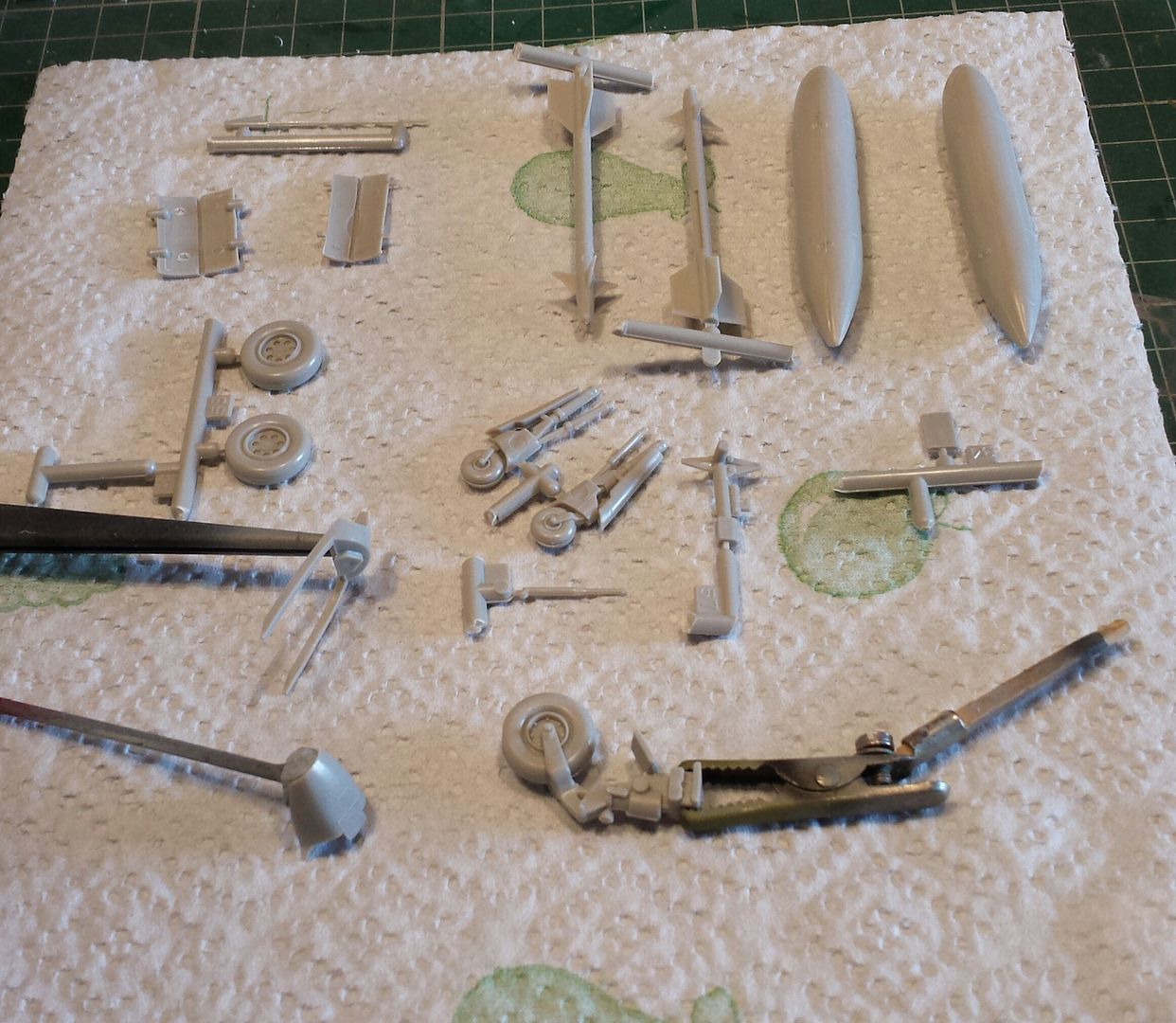
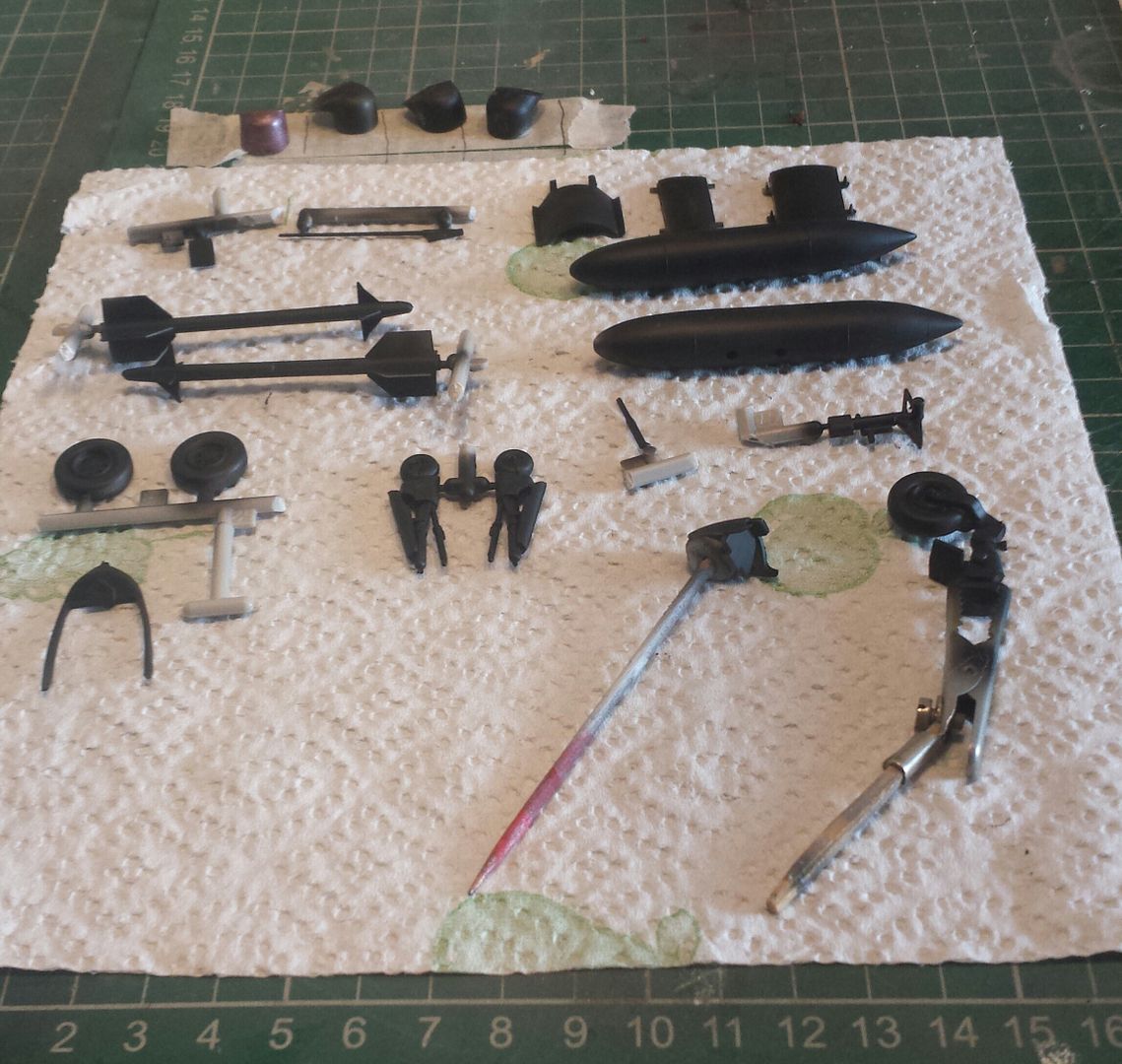
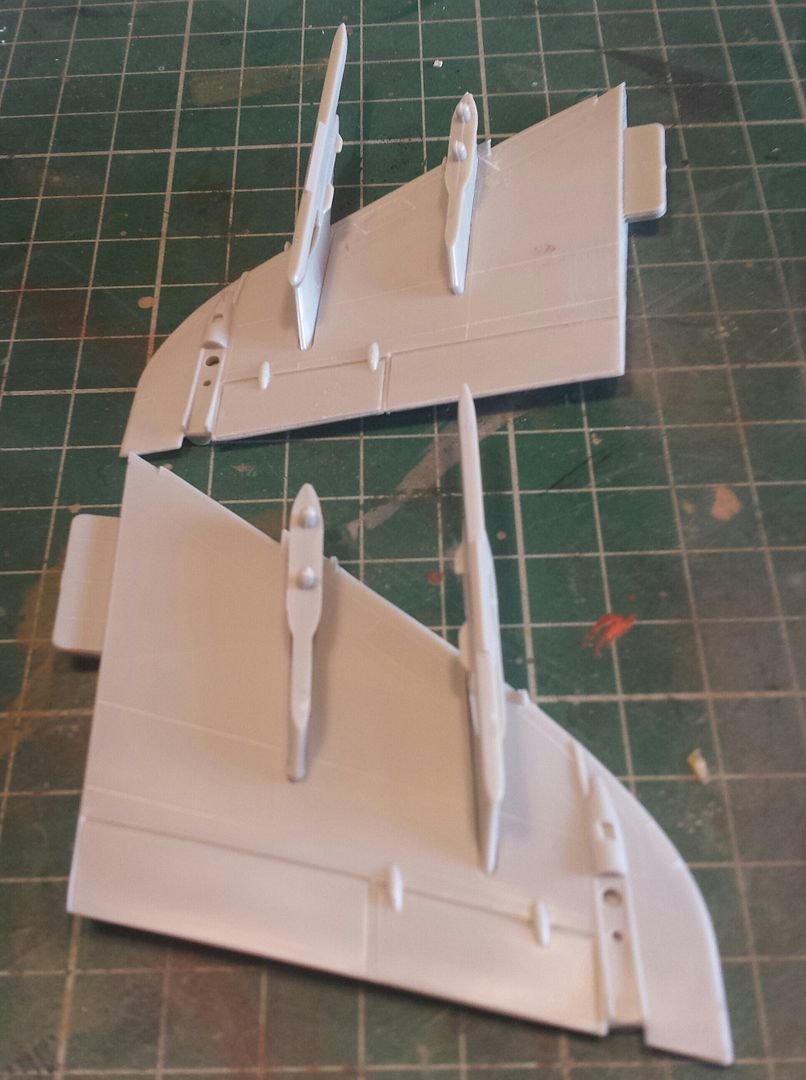
while waiting for those to dry, i put the wings together and the pylons on these had to be set right because of the angle of the wings .
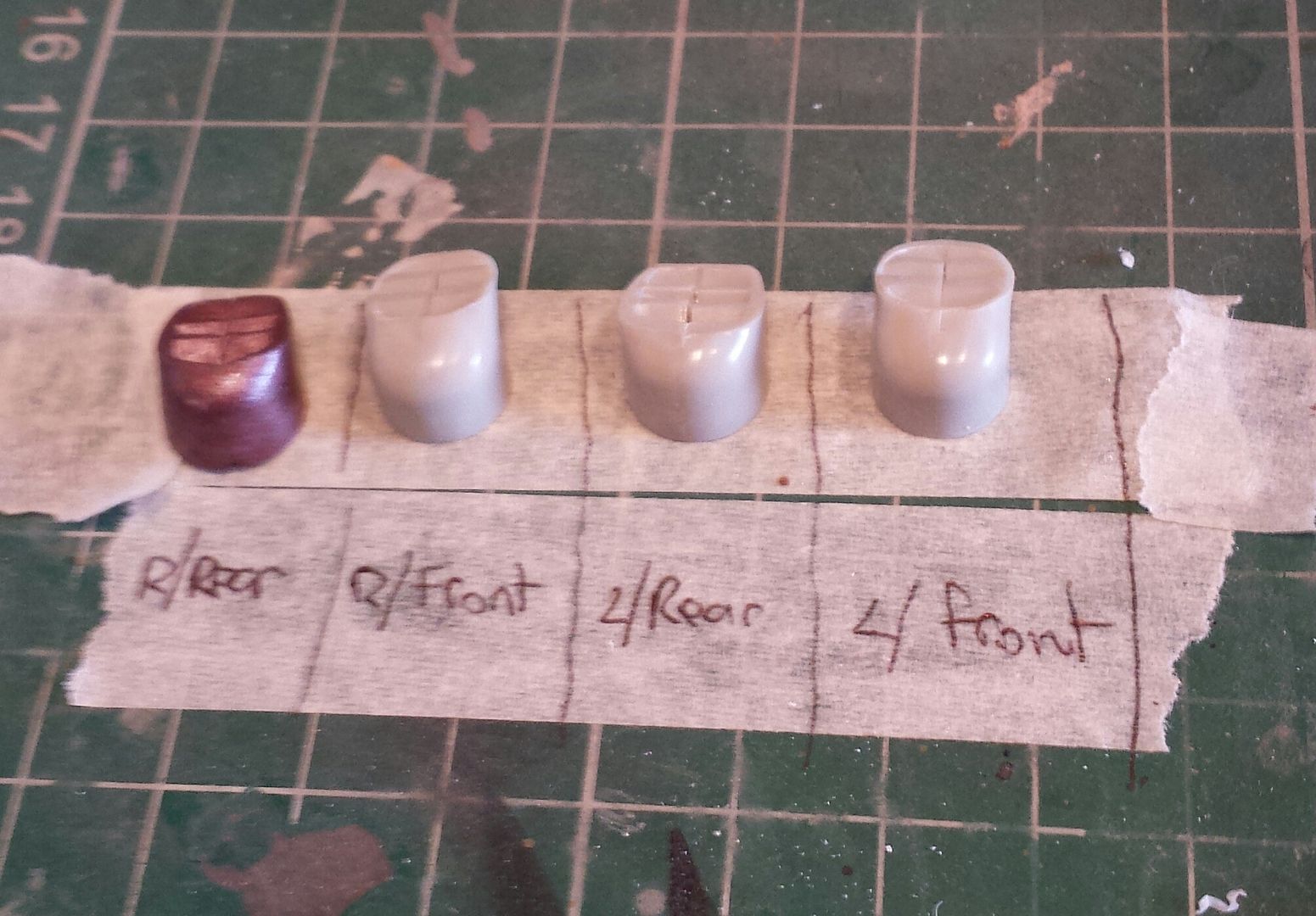
Now we come to the rota nozels, acording to the instructions its a mix, but it does not give the amount of each .
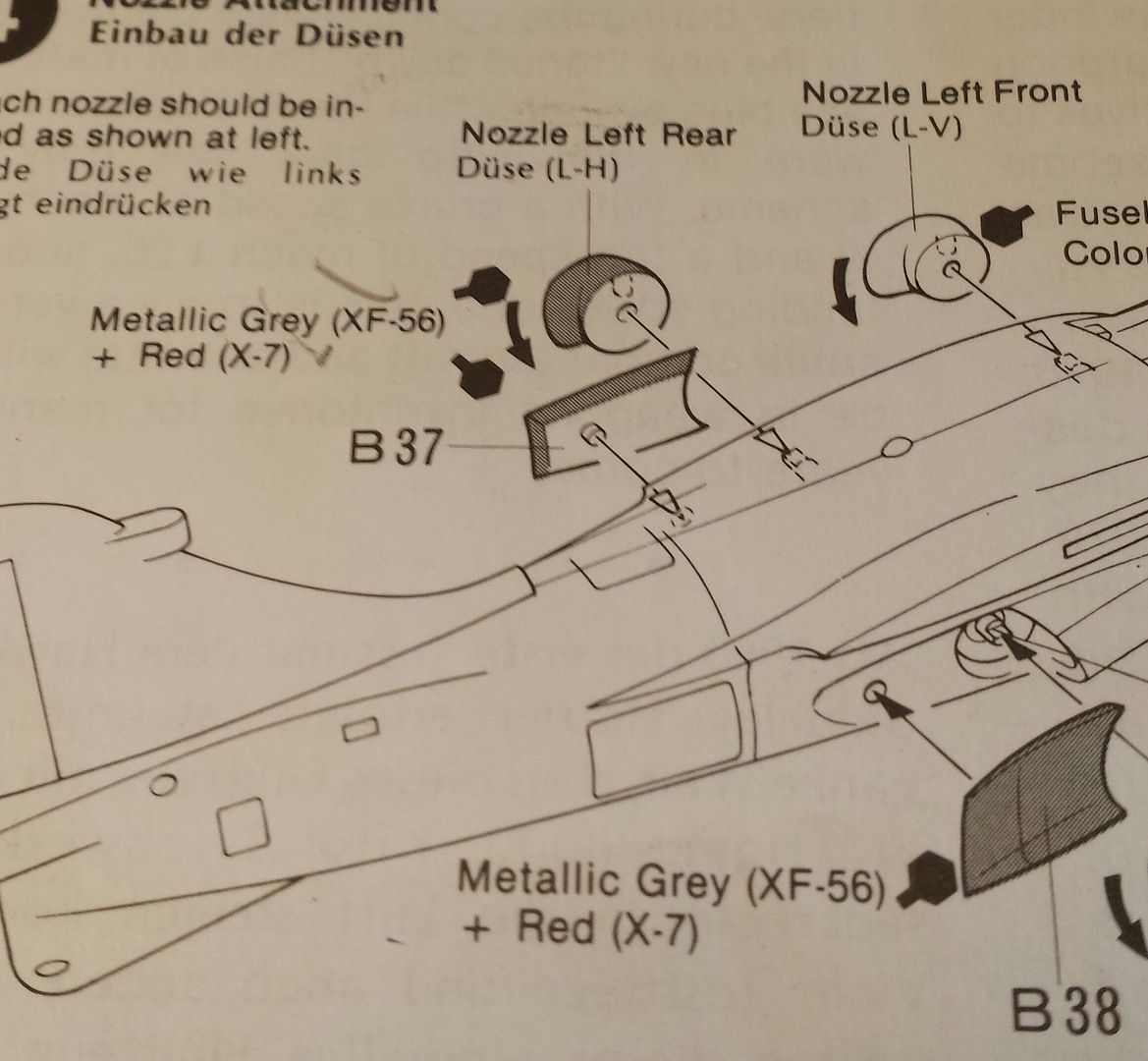
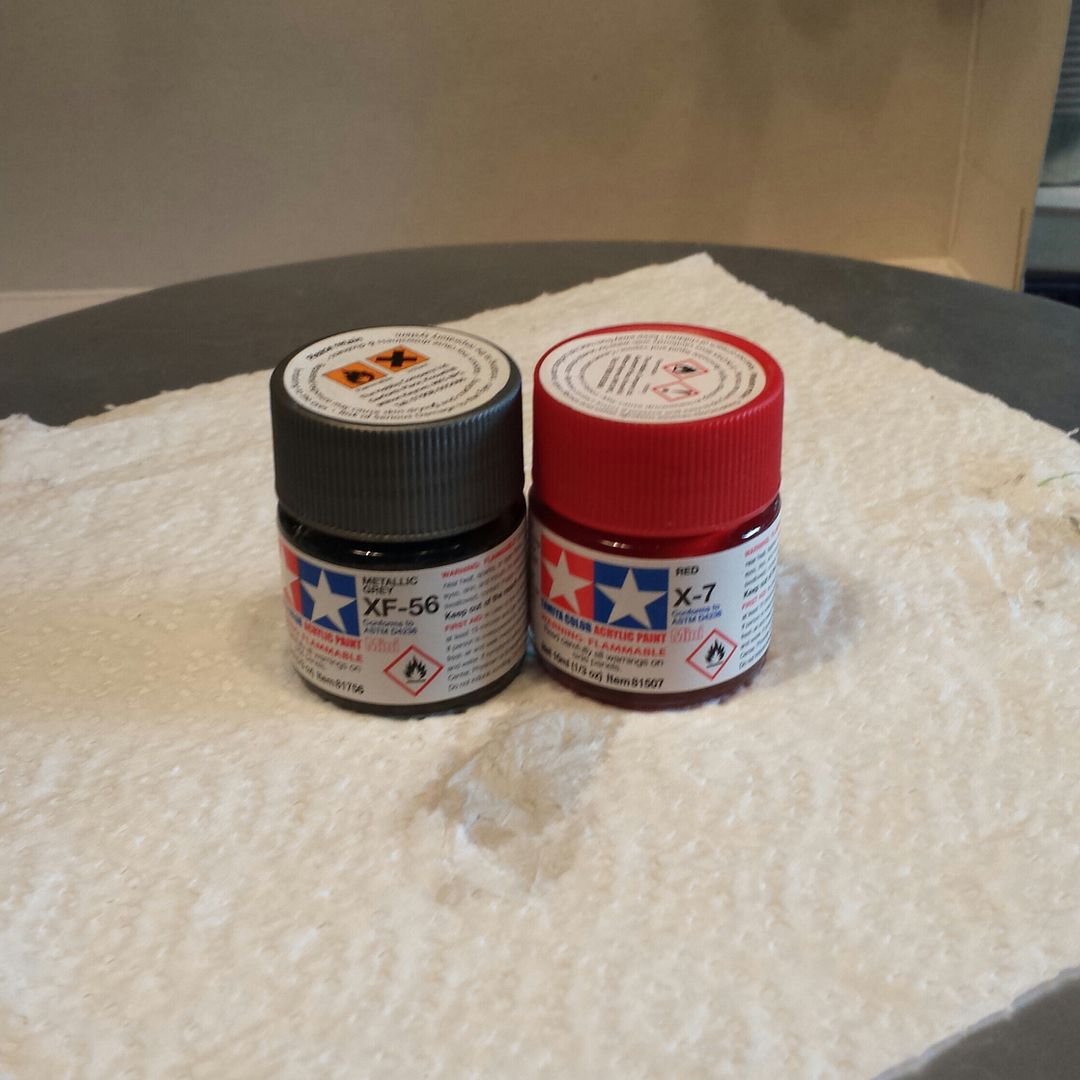
so i gave it a go not happy with it so will keep trying and mixing till i get it right .
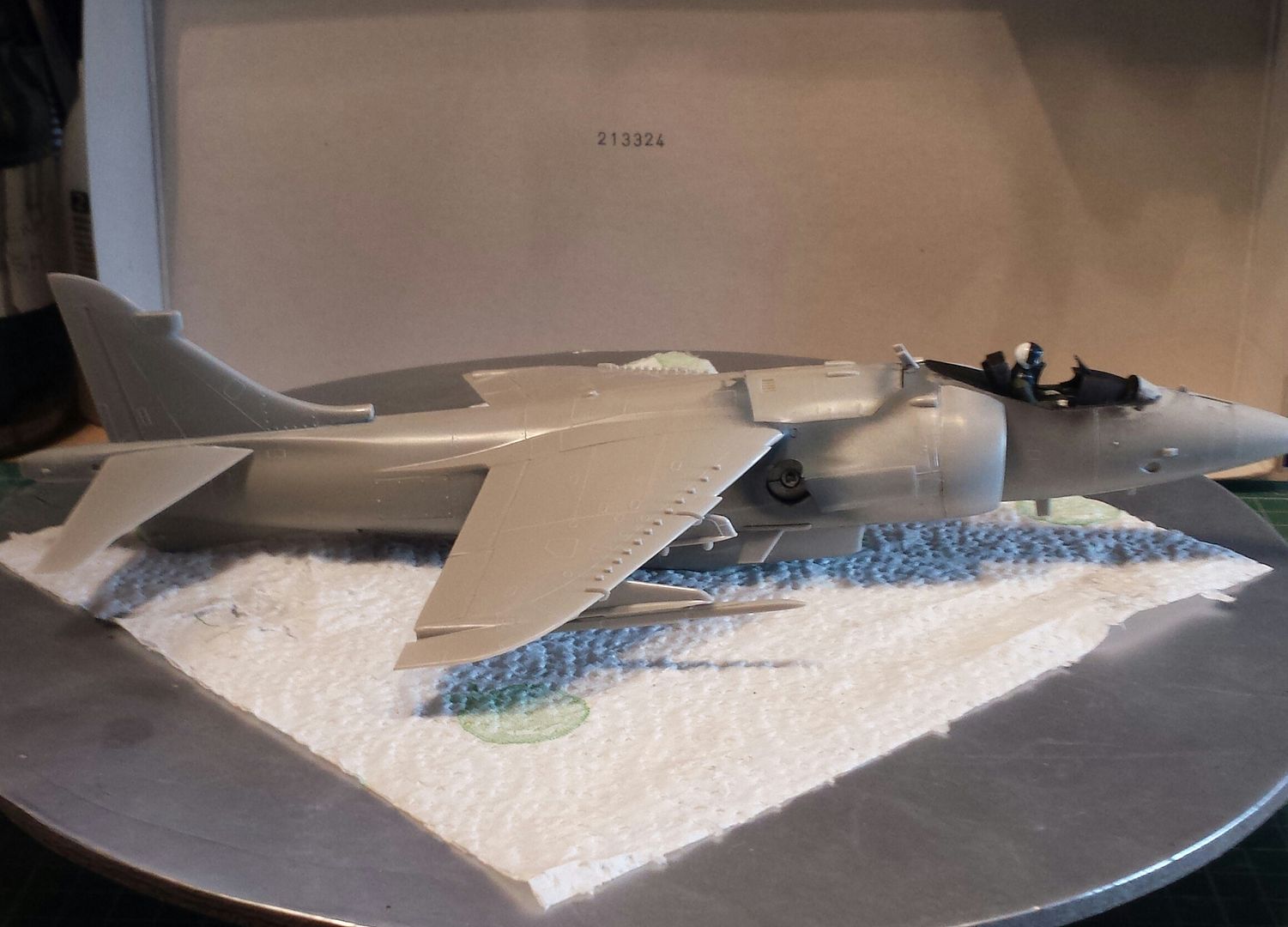
next part was to fix the wings and tail sections so i could get the right angle thay went on fine, the tail part can rotate but i fixed it in place.
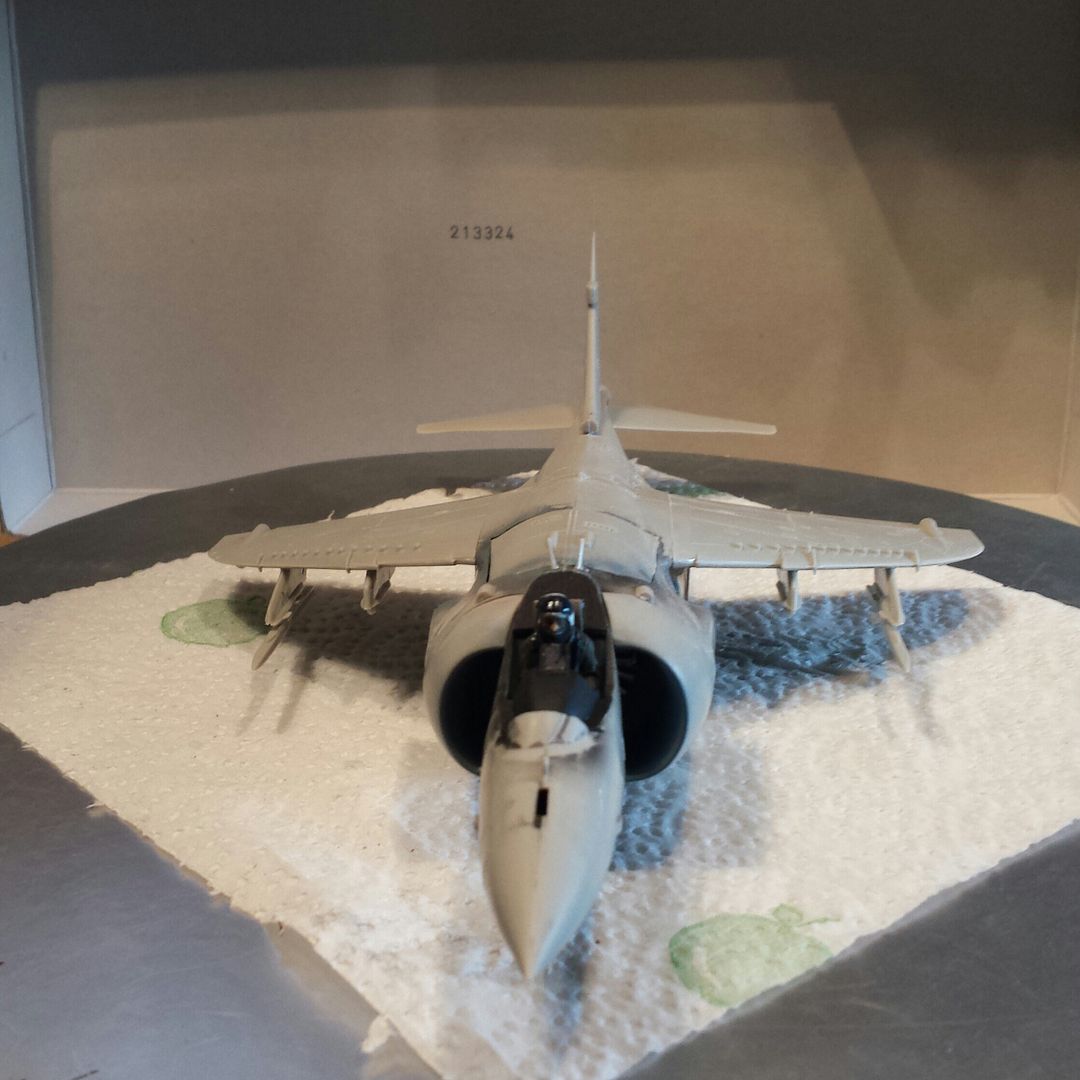
and for the last part of this update i worked on the canopy ,the frame lines were not very clear so i marked the masking with a marker, and then cut with a sharpe knife .
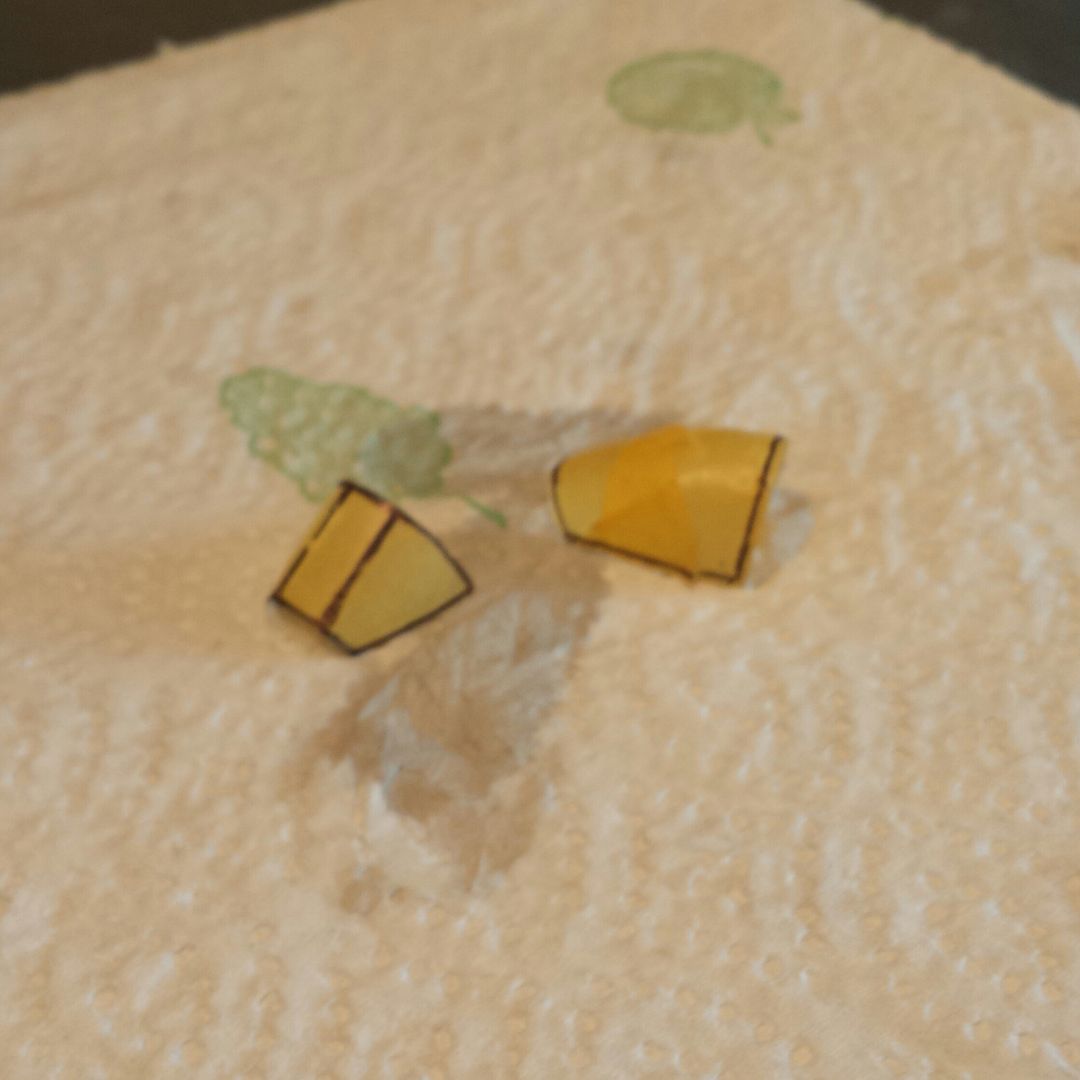
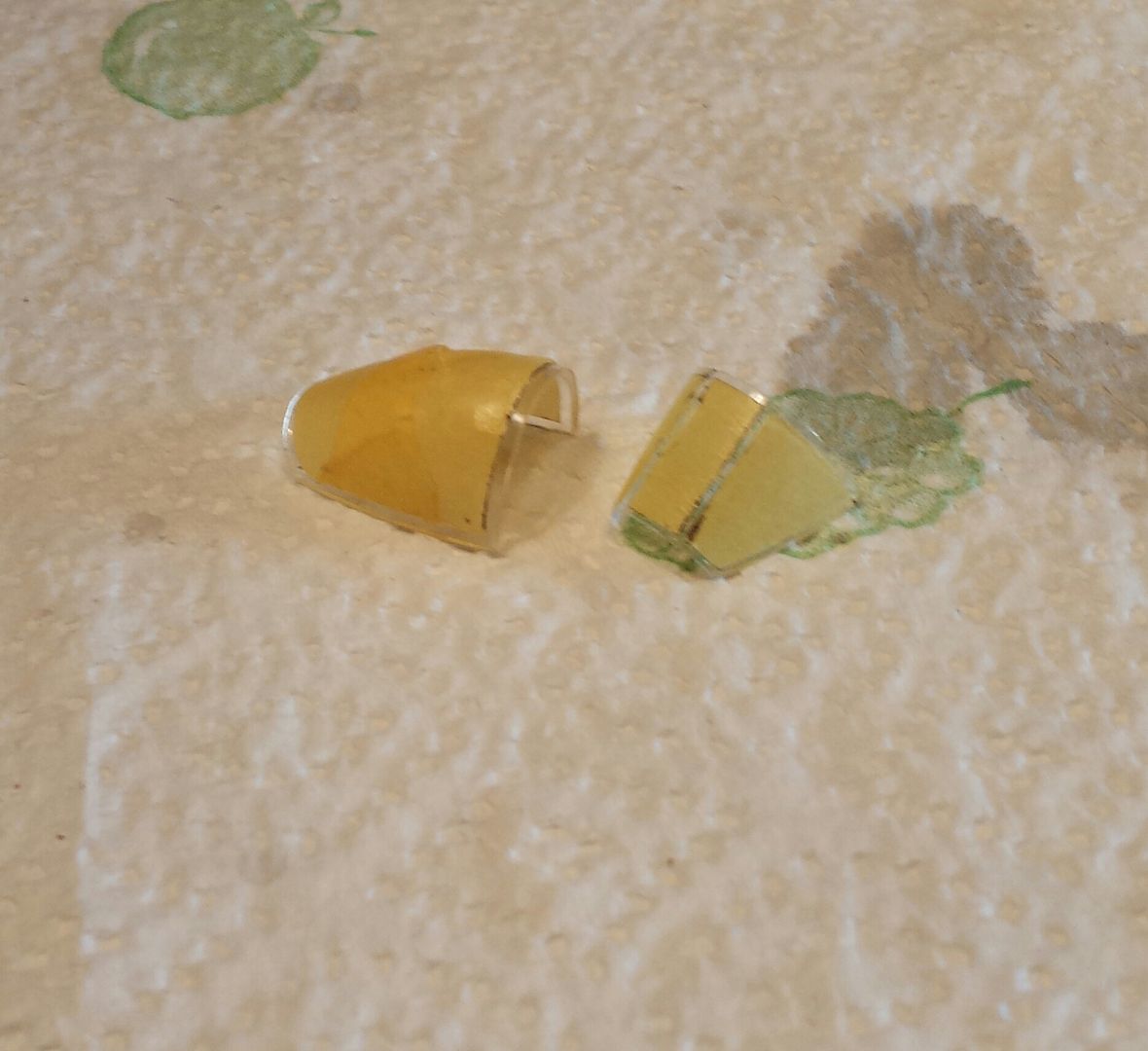
then i white glued it in place , looks ok no fit issues .
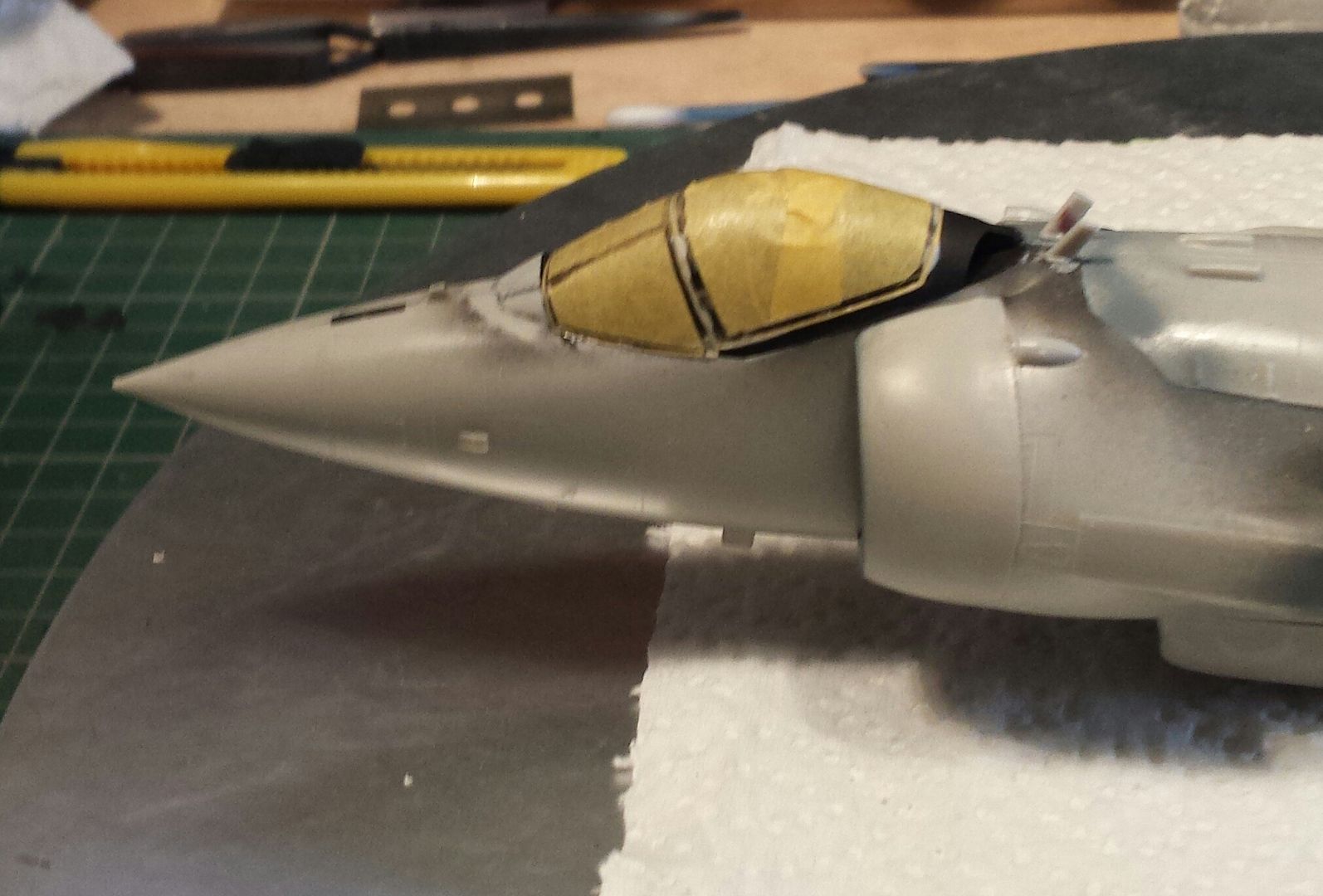
well thats it for this part thanks for coming